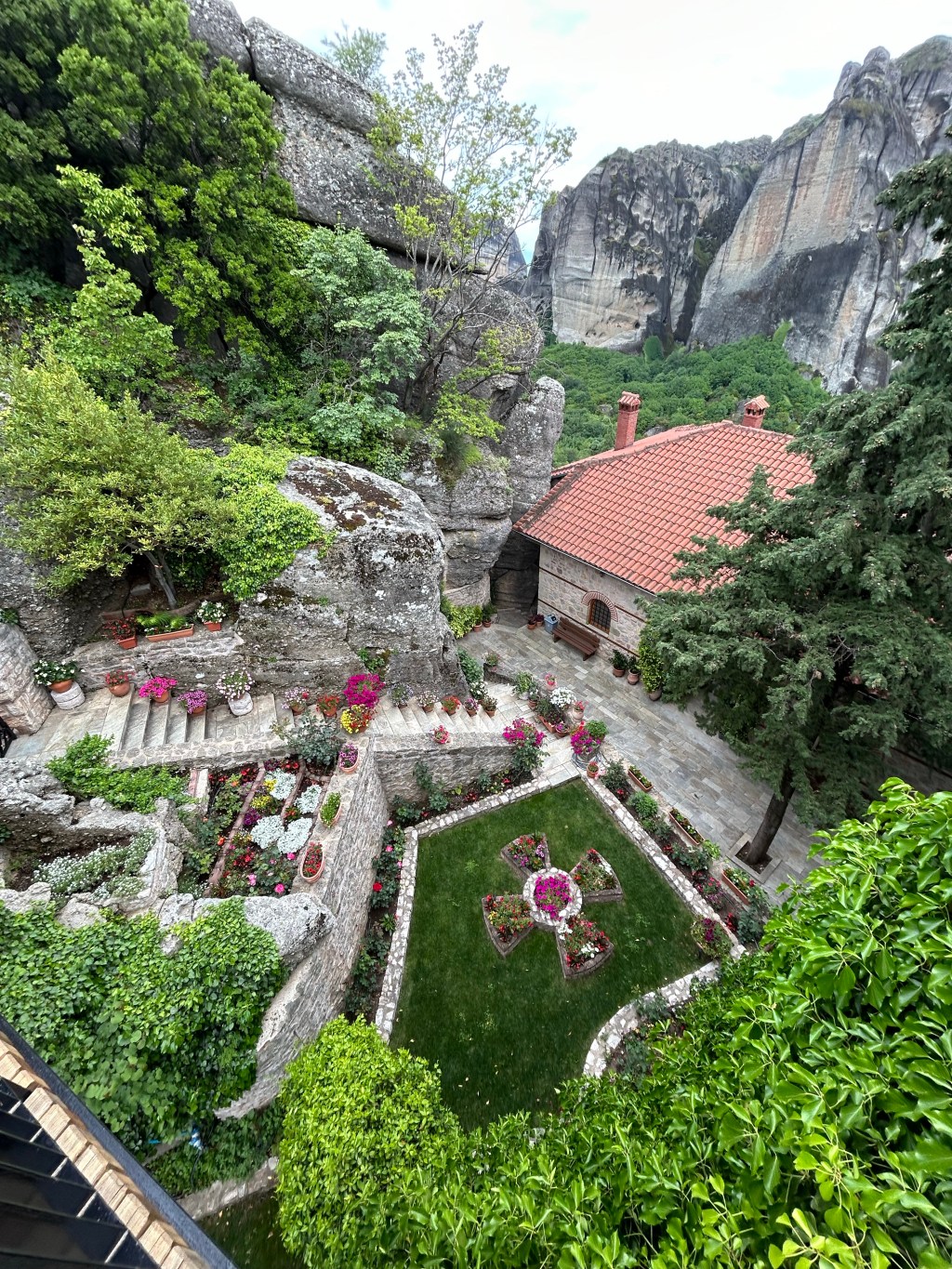
May 23, 2023 — A visit to Meteora, where a monastic community formed in the 8th century B.C. and evolved through the 11th and 12th centuries to the 18th century A.D., was initially on my list to visit while in Athens, until I started looking at how to get there. I was having a great deal of difficulty figuring out how to visit on my own. Then, I stumbled across VisitMeteora and decided to book a day trip to the monasteries through them.
I got up and headed to the train station for 8:00am. The train departed at 8:28am and they recommended being at the station a half hour before departure. I stopped at Starbucks for a coffee and muffin on the way, then took the subway to the station.
It was a four-hour train ride from Athens to Kalampaka, the gateway to Meteora, but the views were absolutely beautiful. There was a café on board and since I’d eaten so early (and didn’t know if we would be stopping for lunch), I purchased myself a sandwich.
When we finally arrived at Kalampaka, it was slightly chaotic as there were so many tour groups departing from the same spot at the same time. After several minutes of searching, I finally found the tour bus that I was supposed to be on and got on board.
Our first stop was at a lookout point, where our guide gave us some of the rundown on the monasteries themselves and the town that sits at their feet. In the late 8th century, people started living in caves in the rock at Meteora for a variety of reasons. Their goals ranged from punishing themselves to earning heaving and proving that God exists — after all, if they could survive life in the caves without food or water of their own or movement of any kind, then God must be the one keeping them alive. Kalabaka had a population of about 12,000 people around this time and it was the village that provided sustenance to the monks who retreated to the caves at Meteora. The monks who lived this way, cramped in the caves, were eventually paralyzed.

Meteora is incredibly unique in that it is a three-time UNESCO World Heritage site. First, for the cultural and religious significance of the monasteries; second, for the cultural and religious significance of the frescoes contained within the monasteries; and finally, for the geological formation of rock at the site, which only occurs in three places in the entire world. If I remember correctly: here, in Meteora; the Dolomites in Italy; and somewhere in Spain or Portugal.
Then, we got back on the bus and headed to a small family-owned café in town. I’ve had amazing Greek food pretty much everywhere, but this off-the-beaten path place was really excellent. I got a portion of moussaka and a drink. This was a quick stop, so once everyone had their meal in a takeaway dish, we got back on the bus and headed up to the monasteries.
The train used to run on a different schedule, leaving Athens at 7:30 instead of 8:30 in the morning. Due to the change in the train schedule, Visit Meteora’s summary of the excursion promises a visit to two monasteries instead of the original three (regardless, though, you get to see all 6 monasteries). Our guide was amazing and we visited three monasteries anyway before we had to get back on the train.
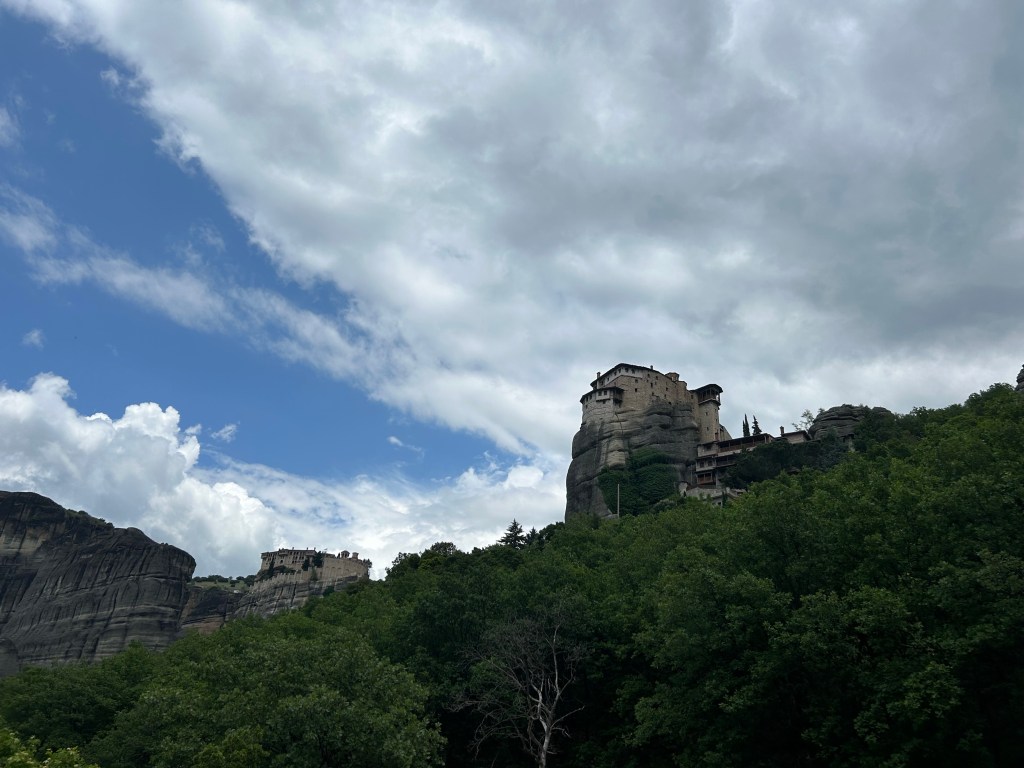
The first was Varlaam Monastery, followed by a walk through the forest along a path that the monks would have used, which led us to the Santa Barbara convent. We also visited Fish Rock (no, no one knows why it’s named that as it doesn’t bear resemblance to a fish) for sweeping views out over Kalambaka and the monasteries. We drove past the Monastery of Holy Trinity, which is the most difficult monastery to access (see below to see why!) and finally visited St Stephen’s Monastery which has stood since the 14th century.
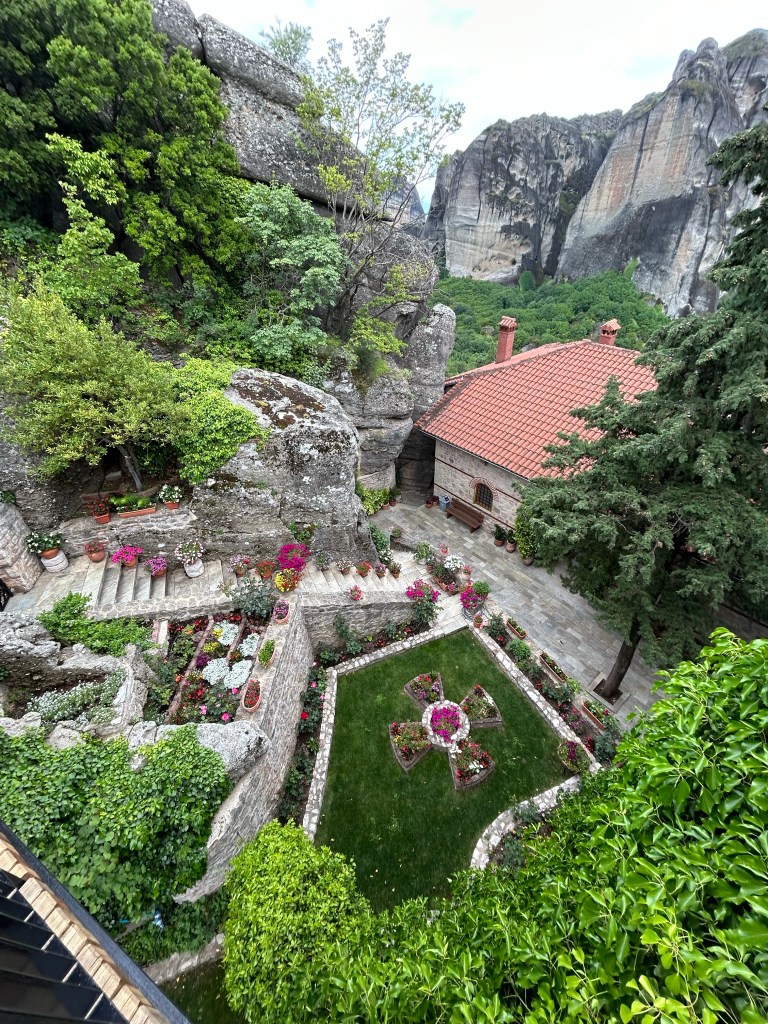
Sidebar: I spent the entirety of the 4-hour train ride to Kalambaka that morning constructing a playlist on my Spotify and listening to it. One song kept playing through my head the entire time I was at Meteora. I’m not entirely sure why, although I might guess that it feels like the song complements Meteora’s ancient nature and deep religious significance. Listen to it here.
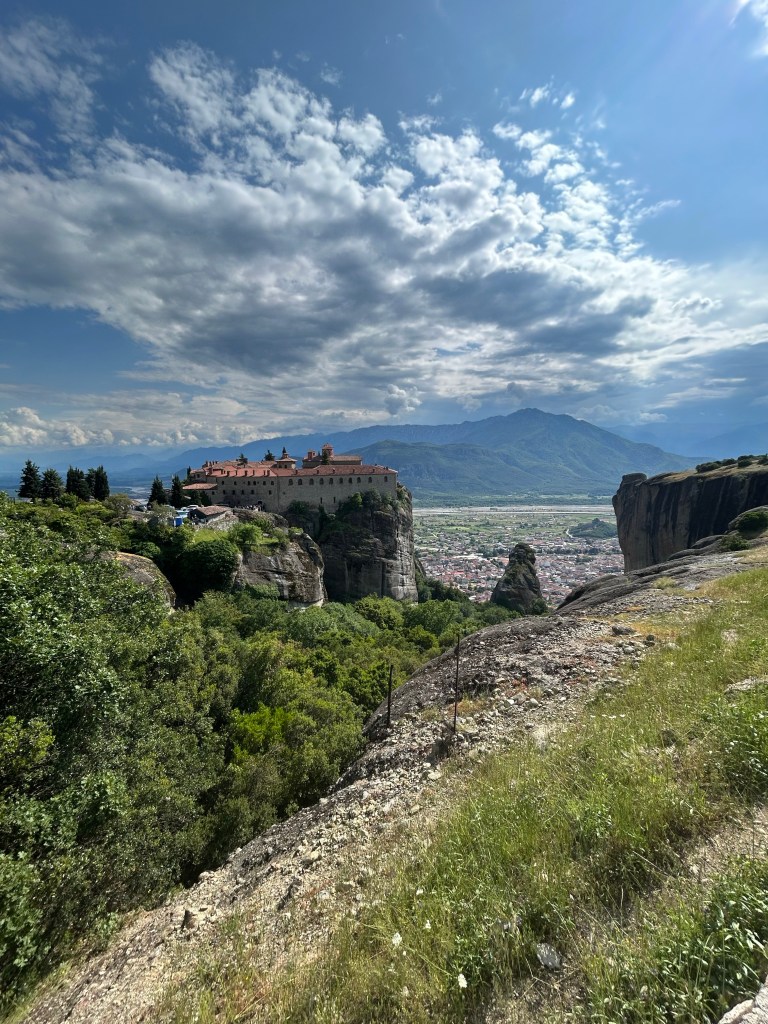
We had to get back on the bus and leave after our visit to St Stephen’s Monastery. We drove back down the mountains and into Kalambaka, where our guide gave us some last recommendations of quick cafés to stop into for some takeaway dinner before getting on the train. I got a dish of soup from one of them and then got on the train and settled into my seat.
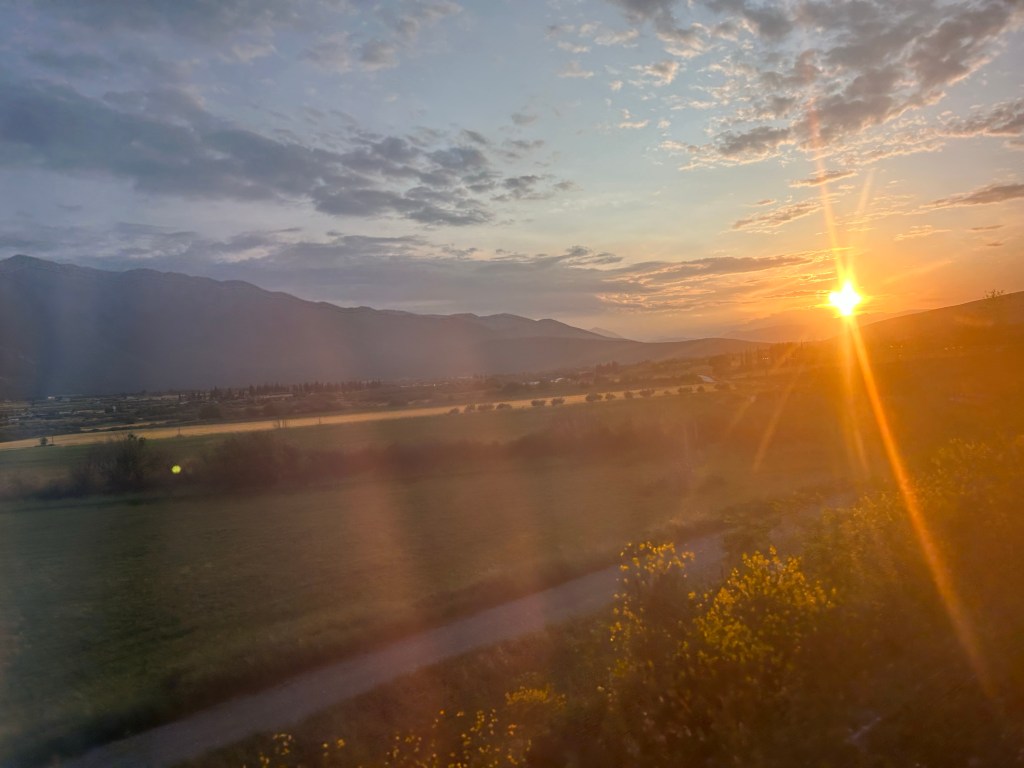
My soup, unfortunately, was not warm, so I ate a little bit of it and then kept the rest to heat up when I got back to the hostel. The train ride itself was uneventful; I amused myself as best I could (I think I might have been reading a book at that point) and admired the sunset until night fell. (The sunset was absolutely beautiful.)
I took the metro back to the hostel from the train station and heated up my soup. When I was finished, I went up to the room, showered, and crawled into bed.
If you enjoyed this post, feel free to leave a like, comment, and share with your friends and family. Enjoying following along? Hit subscribe to receive notifications when I post! If you’re looking for more frequent updates, follow me on Instagram @cait_around_the_world.
 CAIT AROUND THE WORLD
Leave a comment