March 4, 2023 — Following another slow morning, I made my way over to Nobbys Beach. This is another of the main beaches in Newcastle and I have to say it’s probably my favourite. I especially liked that the sand was fairly flat in places and it made it really nice to lay out on a towel and soak up some rays.
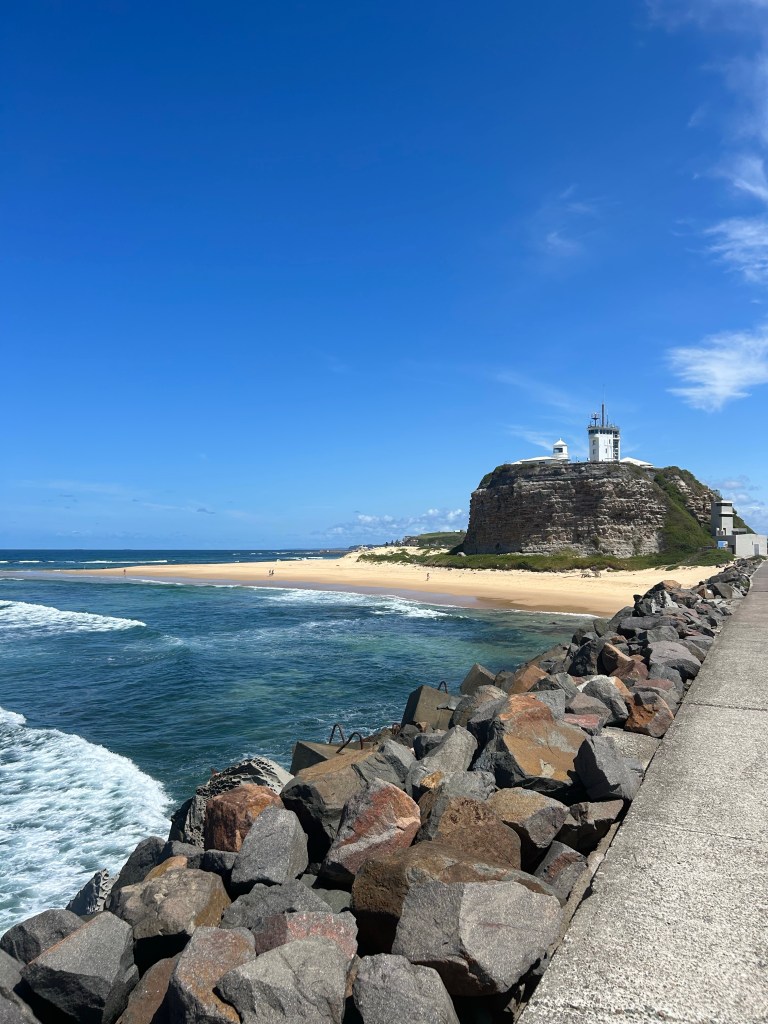
Before I experienced the majesty that was this stretch of sandy beach, I took a really nice walk along Macquarie Pier. Macquarie Pier was actually constructed in 1846 on top of a sandbar that was continually formed by tides. Ships coming into port were often beached on the sandbar and the pier was the city’s way of resolving the problem and directing traffic into the appropriate channel. Since Newcastle Harbour was deemed the first commercial port in Australia in 1799 and remains the largest port on the east coast, this is incredibly important.
The pier isn’t the only guiding light for ships, though. Marine pilotage started in Ancient Greece and throughout Newcastle Harbour’s history, marine pilots have met ships out in deeper water then navigated the tricky channel while the master of the ship retained command of the vessel. Nobby’s Lighthouse, completed in 1858, also helps guide ships to safety and is the oldest surviving lighthouse in New South Wales.

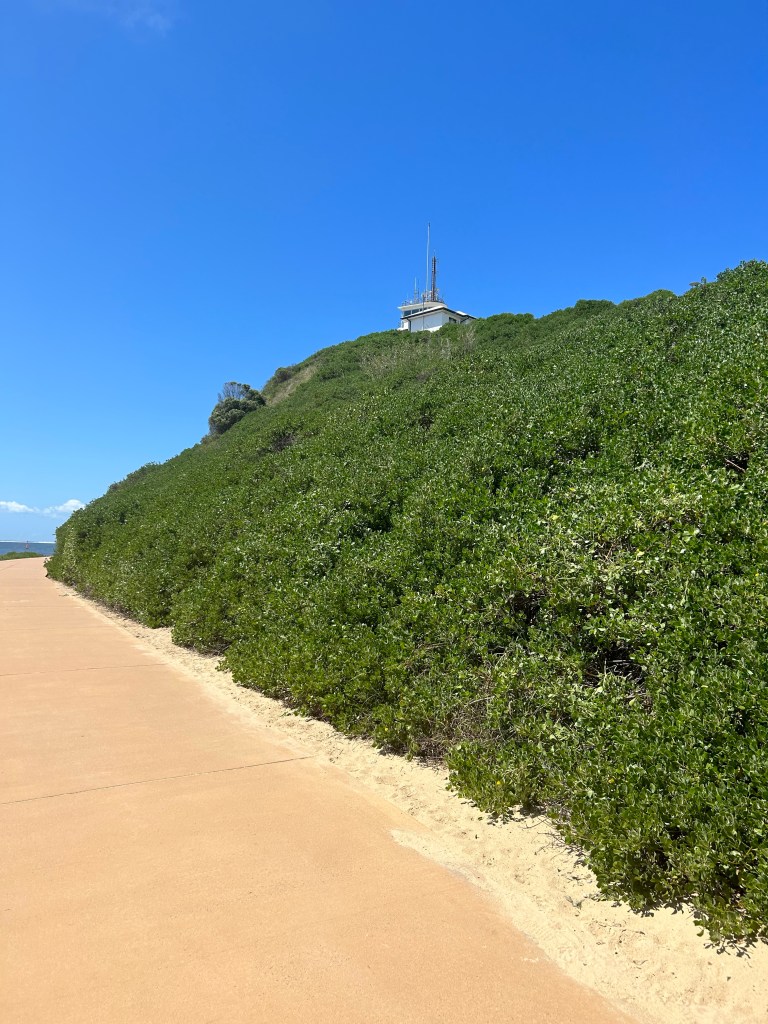
Bitou Bush covers the dunes here, preventing erosion. But did you know it’s actually an invasive species, accidentally imported from South Africa in the 1900s? It was originally classed as a noxious plant for its effects on the ecosystem until it was removed from that list and intentionally planted to protect the coastline. However, it grew and spread at such a rate that it was subsequently put on the invasive list. Bitou bush can be found across every territory except the Northern Territory and covers more than 80 percent of the New South Wales coastline.
Nobbys Beach is actually not a natural beach: when the pier was constructed, sand built up against the south side and formed the beach that is so popular in Newcastle today.
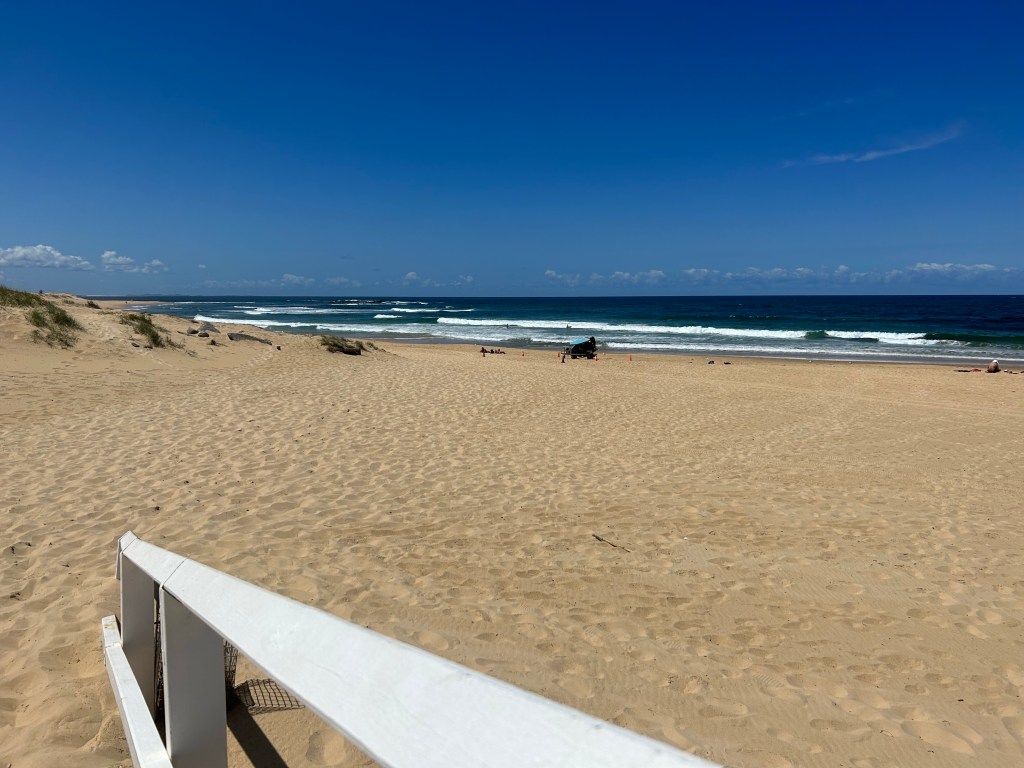
There are tons of beaches in and around Newcastle — you will see, of course, that I visited three of the city’s major beaches while I was here. These beaches, including Nobbys Beach, actually became the site of shanty towns during the Great Depression. In July 1930, there were approximately 170 men camped around the beaches. Some of these camps were established by the State and Commonwealth Governments, like the shanty town on Horseshoe Beach. It was dismantled in 1937 with the threat of impending war and Camp Shortland was constructed.
Newcastle was an important part of the war effort, supplying coal for fuel. It was the target of shelling from Japanese forces in June 1942. Thankfully, minimal damage was sustained by the town and there were no casualties. Fort Scratchley, just a few hundred metres from where I stood on the pier, returned fire and drove the enemy submarine off.
This area of Newcastle is rich with history, and is much more than a commercial port and leisure-filled beach. For interesting historical facts and a deeper understanding of the area, I highly recommend taking a walk along Macquarie Pier!
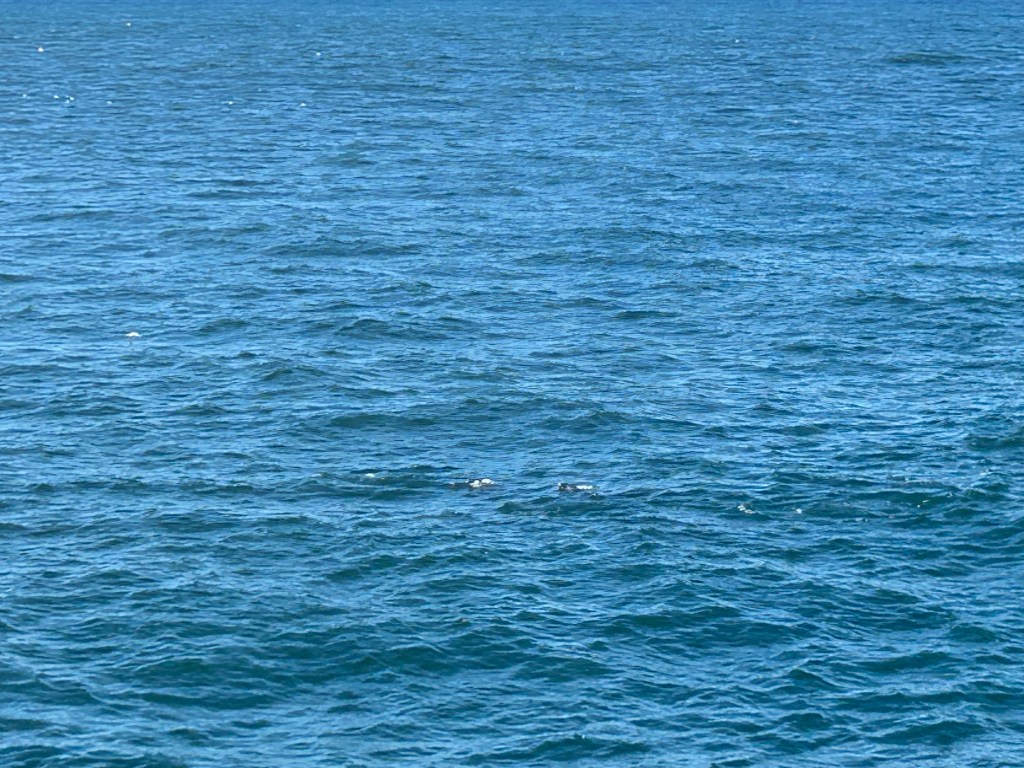
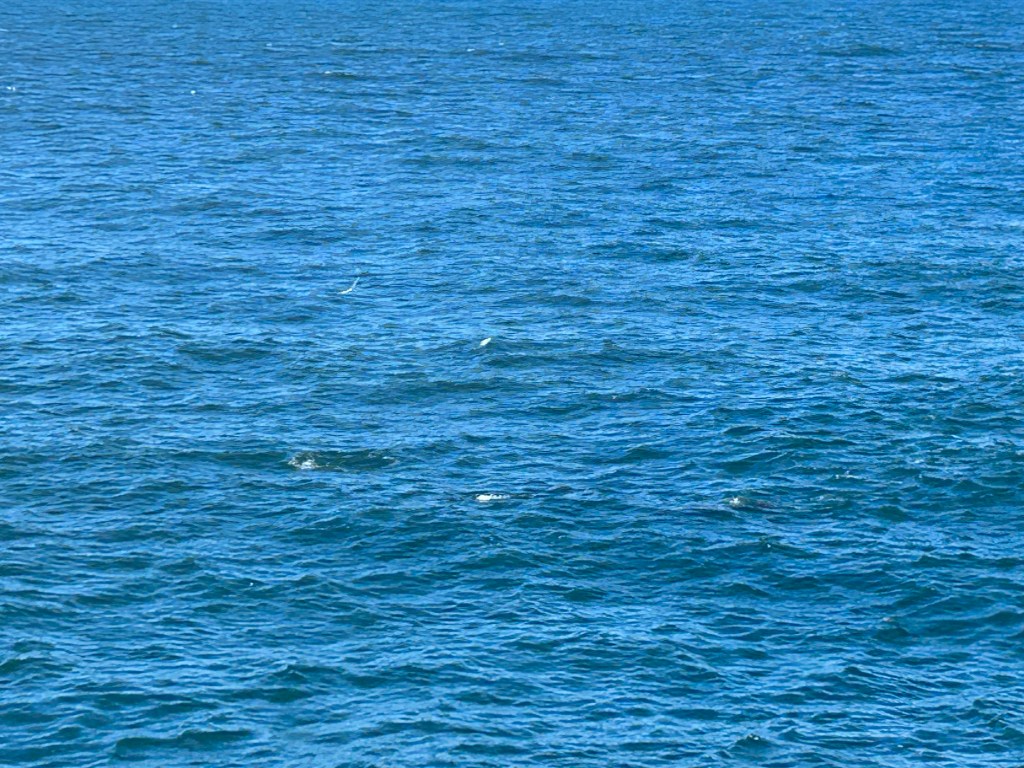
When I reached the end of the pier, I even had the treat of seeing dolphins!
I spent a couple hours between the sun and the sea, working on my tan and reading. When I was ready to go, I made a quick pit stop at the Woolworths Metro for a couple of things and then made my way to the light rail and back to the hostel. After dinner, which consisted of a Caesar salad, chicken, and pasta on the side, I watched another movie before calling home, then brushing my teeth and heading to bed.
I had a few very quiet, relaxing days in Newcastle, which was definitely needed after my fast-paced tour through Tasmania. Although Newcastle is a fairly large city, there isn’t a whole lot to do beyond the beach, and that’s okay!
If you enjoyed this post, feel free to leave a like, comment, and share with your friends and family! If you’re looking for more frequent updates, follow me on Instagram @cait_around_the_world.
 CAIT AROUND THE WORLD
Leave a comment