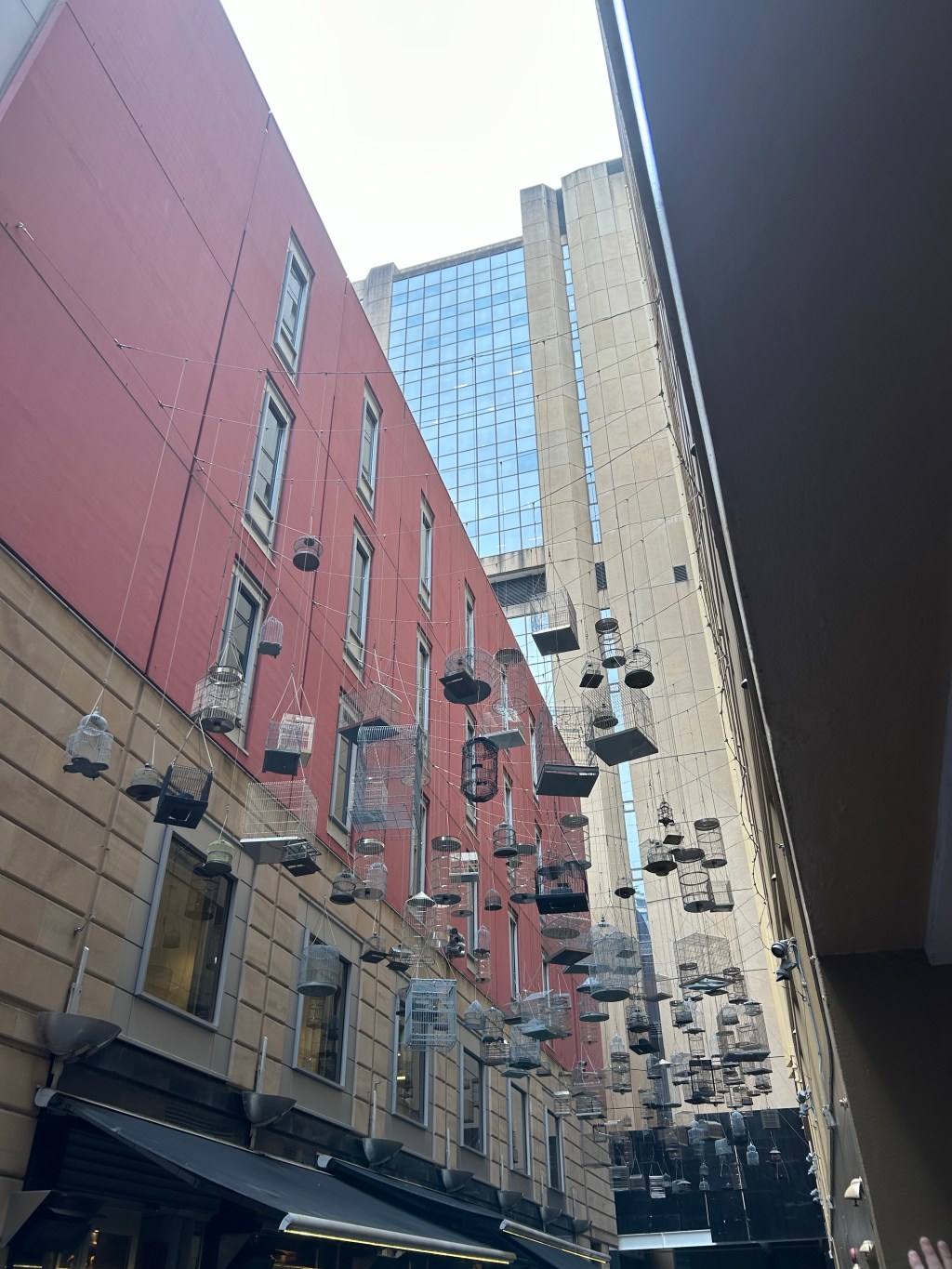
February 9, 2023 — On my first full day in Sydney, I booked in for the I’m Free Walking Tour that runs daily at 10:30am. I booked it the day before and got the last slot available for the day! As the name implies, it’s free, but they still have you sign up for a slot so that they know how many people are coming so that they have enough guides if more than one is needed.
When I arrived at Town Hall that morning, I couldn’t believe how many people were there for the tour! There were several who hadn’t been able to get a “ticket” and so were waiting to see if the tours would have room — say, if someone decided not to show up or if they were able to take on extras. We had about twenty or so people in each group by the time everyone was checked in and sorted.
My tour guide was actually one of the original founding members of the group. He was born in Sydney and grew up here, and he helped start I’m Free when he was in university, with the goal of showing off the city to tourists and travellers on a pay-what-you-think-the-tour-is-worth basis.
The tour was three hours in length, walking from Town Hall (which was about fifteen minutes’ walk from my hostel or four minutes on the L) all the way to Circular Quay, by the Rocks and the Harbour. We passed so many buildings with historical significance; Sydney really feels very much like a tourist city, full stop. There are lots of stories and interesting factoids about so many parts of the city. The Town Hall itself was built on the site of an old cemetery. Graves were moved elsewhere in the city when construction started, but they didn’t do such a good job at making sure everyone moved — bodies still resurface now and again.
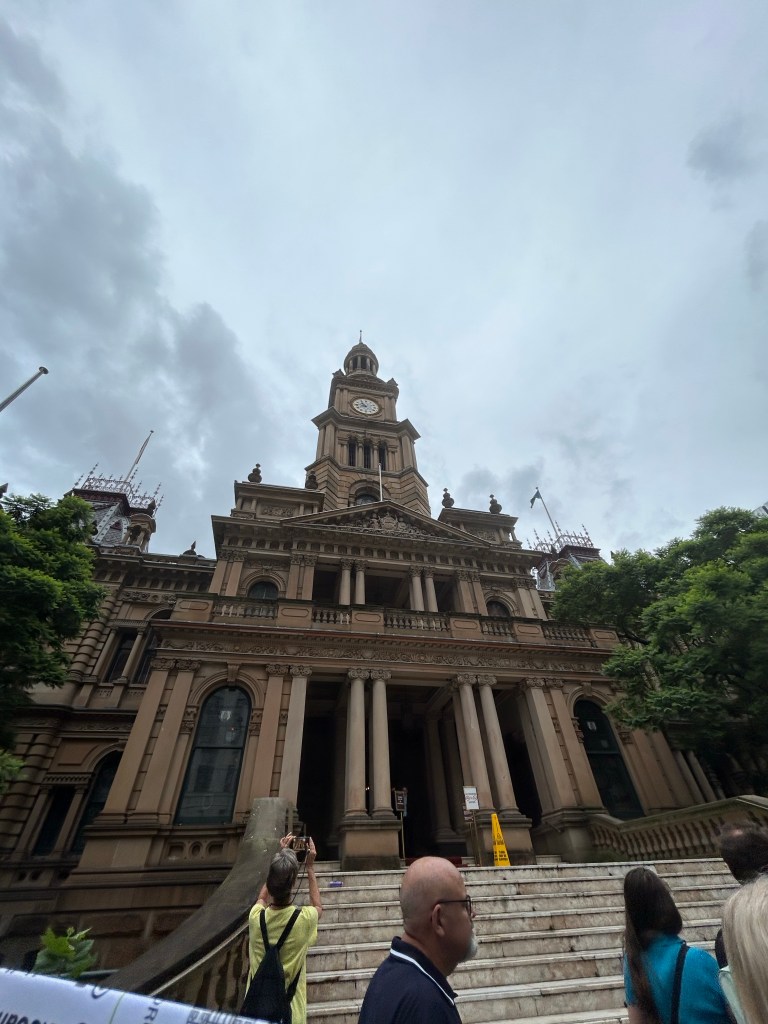
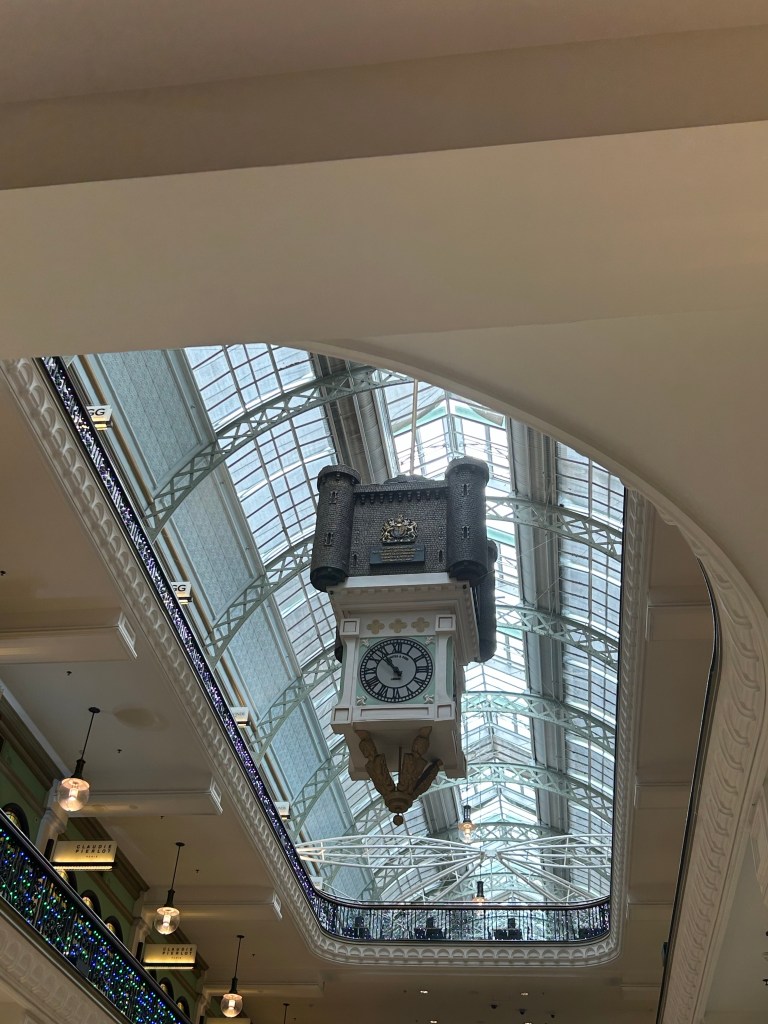
We walked by St Andrew’s Cathedral on the way to QVB, which refers to the Queen Victoria Building. Out front, the Queen’s favourite dog is memorialized in statue as the guardian of a wishing fountain. And he talks. The QVB is an interesting building for other reasons, too: one of the two clocks inside chimes on the hour and plays out different British scenes, there is a letter from the Queen on display that is not to be opened until 2085 (one hundred years after it was written), and there are lots of tunnels underground that connect the buildings in this area.
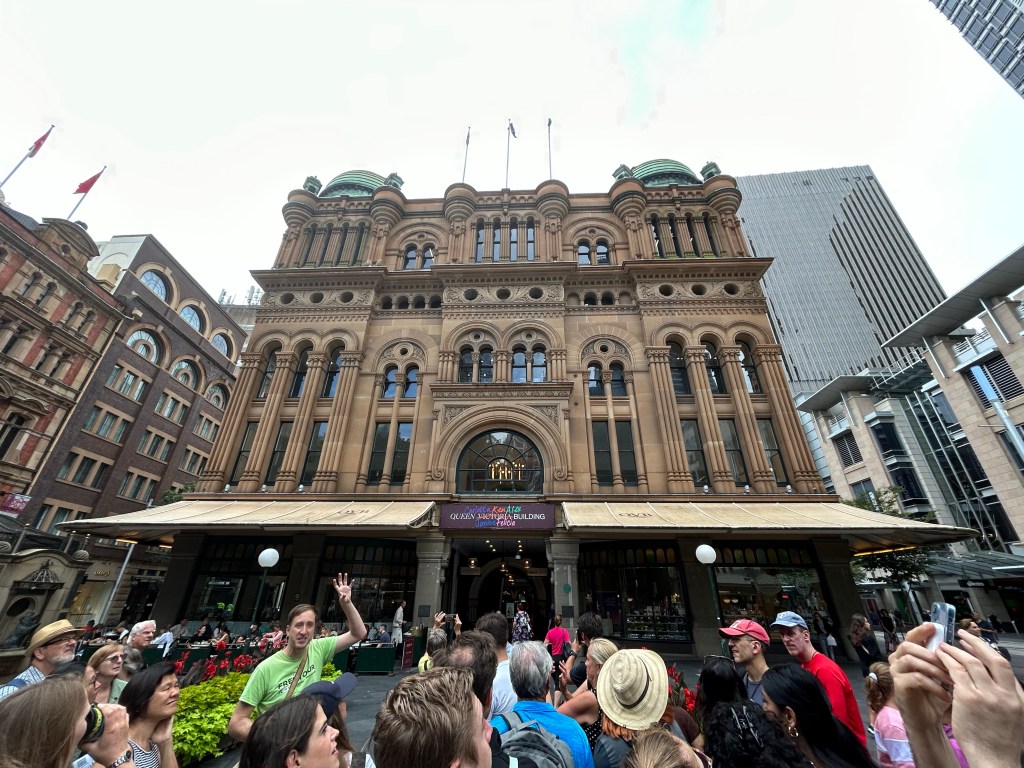

Near the QVB stands the Hilton hotel, of the Hilton hotel chain. An interesting little bit of information on it: a bomb was detonated inside the building 45 years ago when important dignitaries and officials were meeting and staying inside the hotel. But get this: they never figured out who did it.
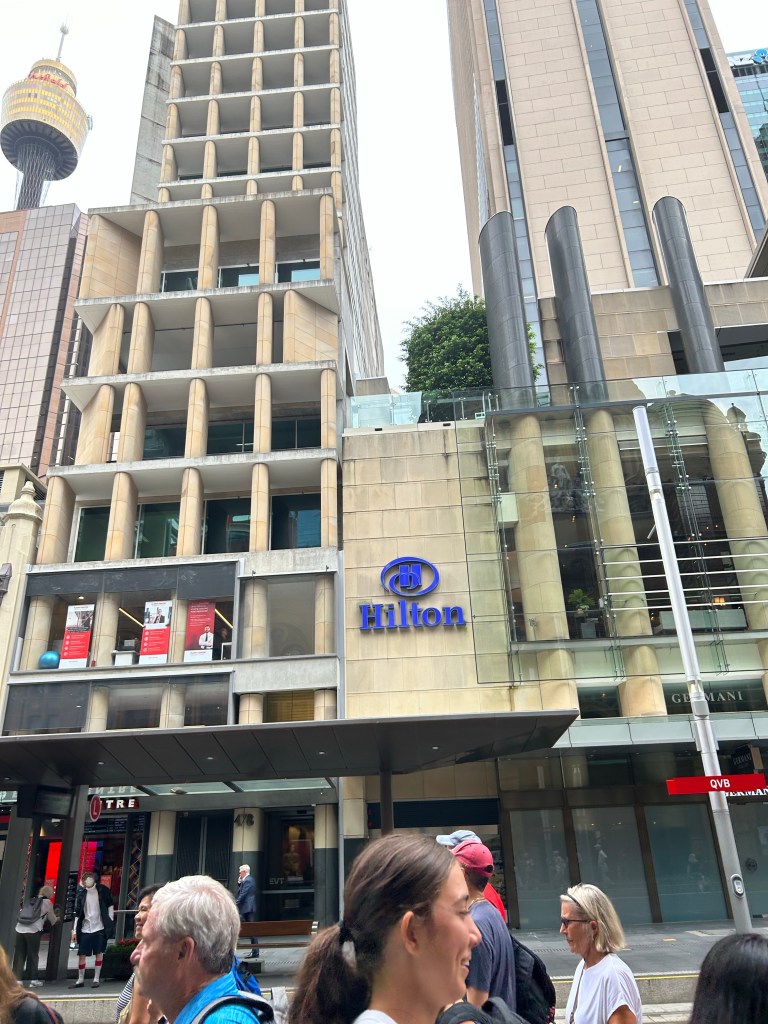
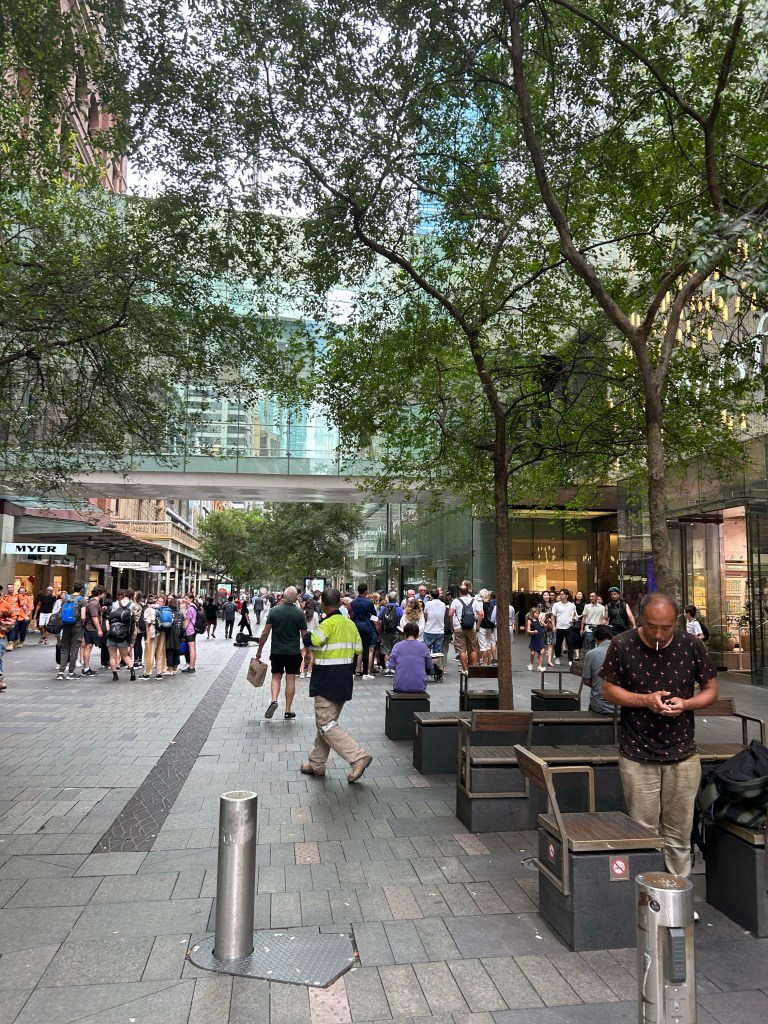
We cruised on toward Pitt Street, where the Strand Arcade and the Westfield shopping complex sit. Most buildings in the complex are owned by Westfield now. When they redid the shopping area, Westfield was able to buy up most of the storefronts, unify them, and now rent out said storefronts to the tune of $12,000 per square foot. But they don’t own all of them. If you look, you can see that one storefront is slightly lower than the others. That is the only independently owned piece of property left as part of the Westfield complex — pretty smart owners, considering the rental value!
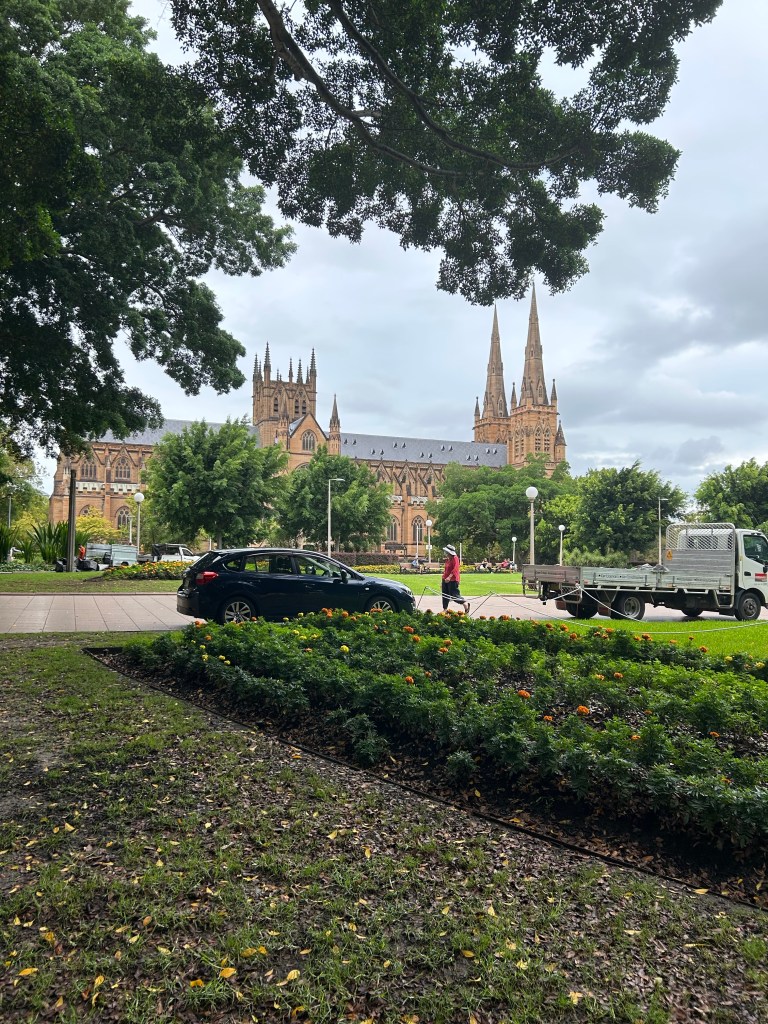
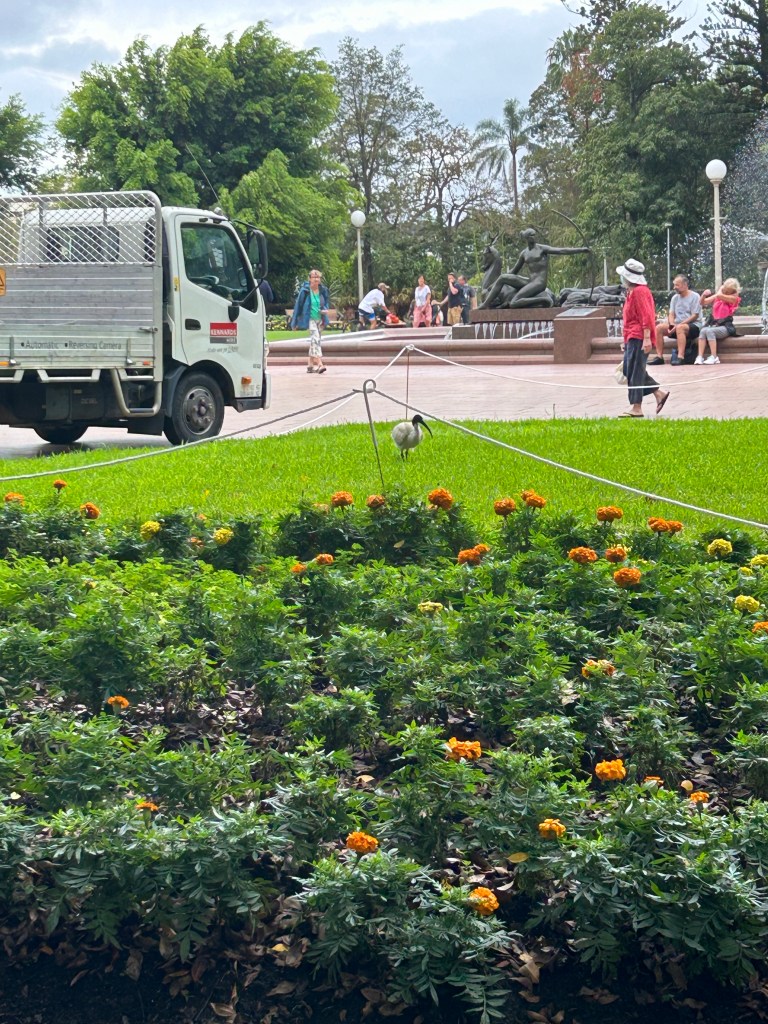
At St Mary’s Cathedral, which took 130 years to build, we not only saw the facade of the building but also the Archibald Fountain and several ibis birds. Like our murder chickens (Canadian geese) in Canada, Sydneysiders have a name for the ibis: bin chickens. Their long beaks are particularly good at rooting around in the garbage. All these things are situated in Hyde Park (sound familiar?), a beautiful spot of greenery in the middle of the city.
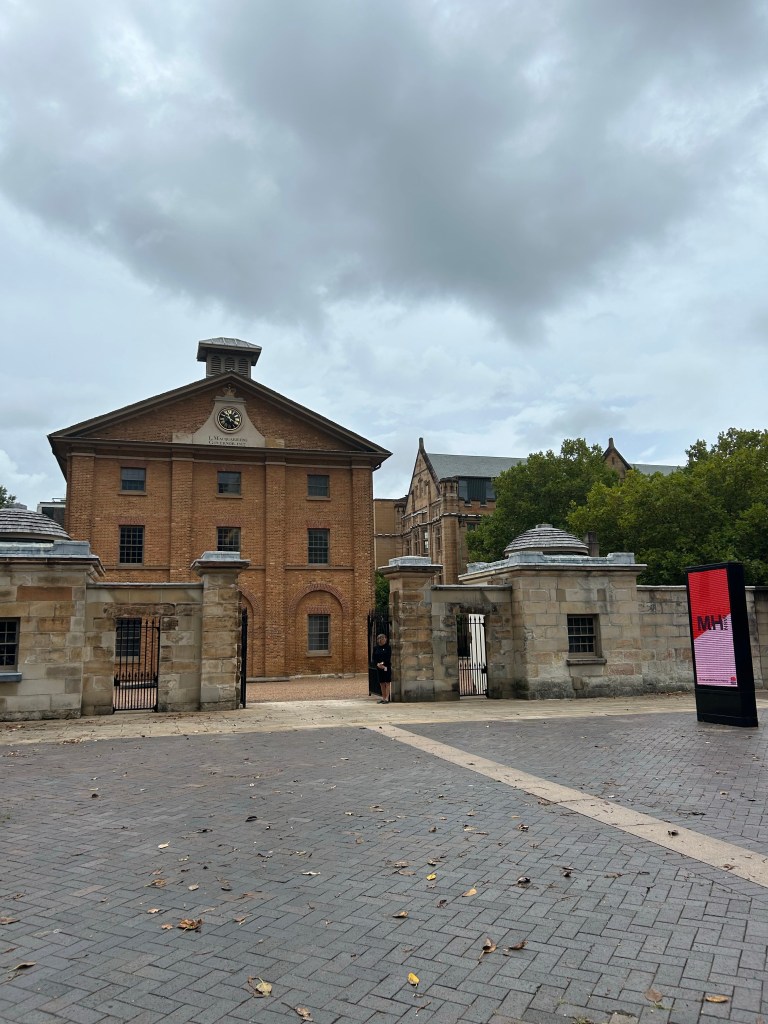
We walked out of the park and past the Macquarie-built Hyde Park Barracks. This was a spot for housing the convicts that had been sent to the settlement in an effort to “clean up” the area for the non-convicts that also lived in the city. Lachlan Macquarie was instrumental to the various social, political, and economic changes Sydney underwent in its early days as it shifted from a convict settlement to a proper city. Many things in the city are named after him today.
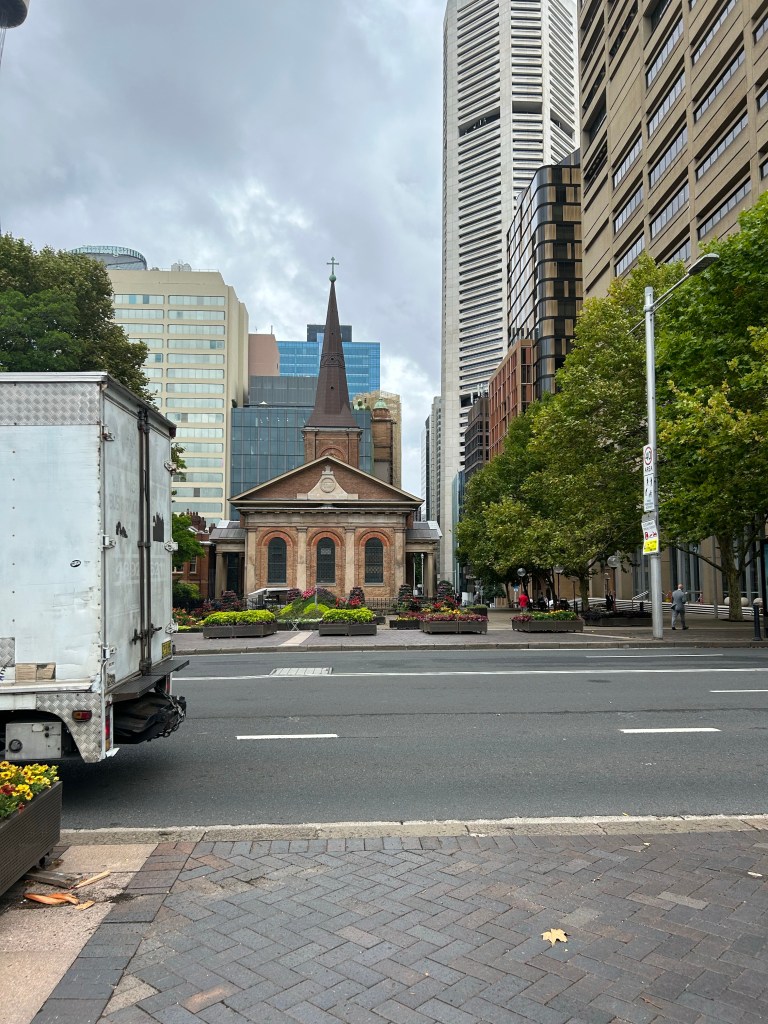
Opposite the Barracks sits St James’ Church, which was built in 1824 and was the tallest building for 50 years. Now, Sydney Tower is the highest. You can go up, too, but it’s recommended you sit and have a slow drink at the bar as it rotates slowly around to see the whole of the city from above — it’s cheaper than the observation deck.

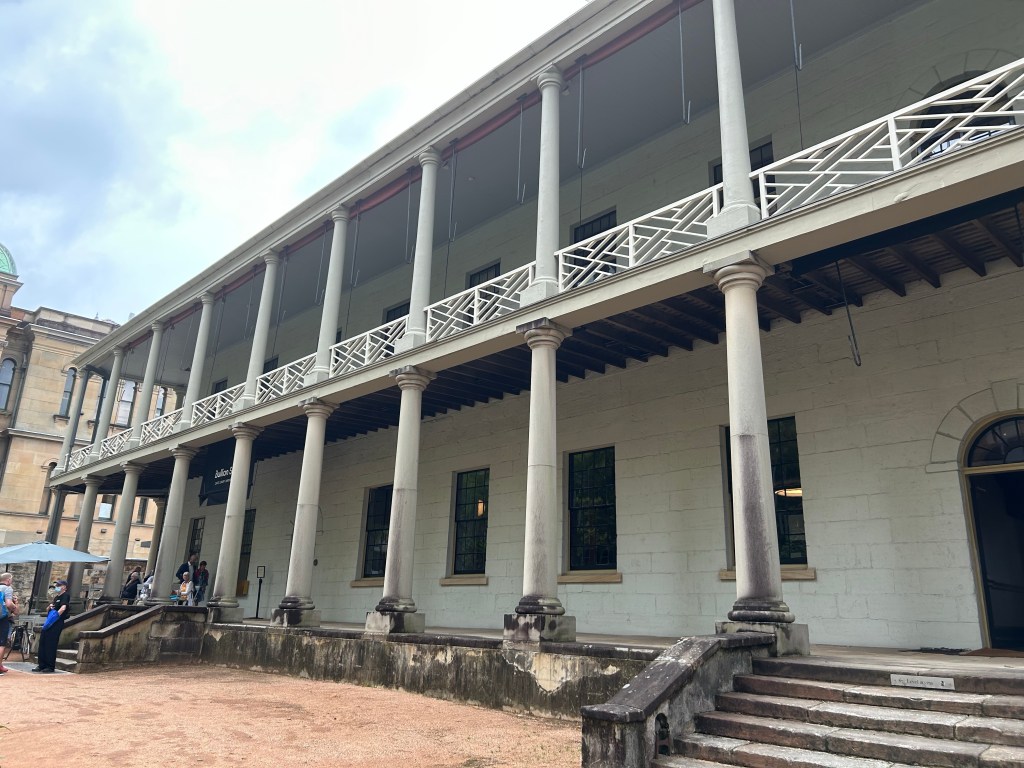
Our next stop was the Mint. This is the oldest surviving public building in the city and it used to be the hospital. It was also referred to as the Rum Hospital because the funds that were used to build it were raised through the sale of rum by specially licensed proprietors to the masses. At the time, it was far too large for the settlement, so it gained various other uses in addition to its hospital function. The Royal Mint set up shop in one wing of the hospital, making it the first Royal Mint to operate outside of Britain.
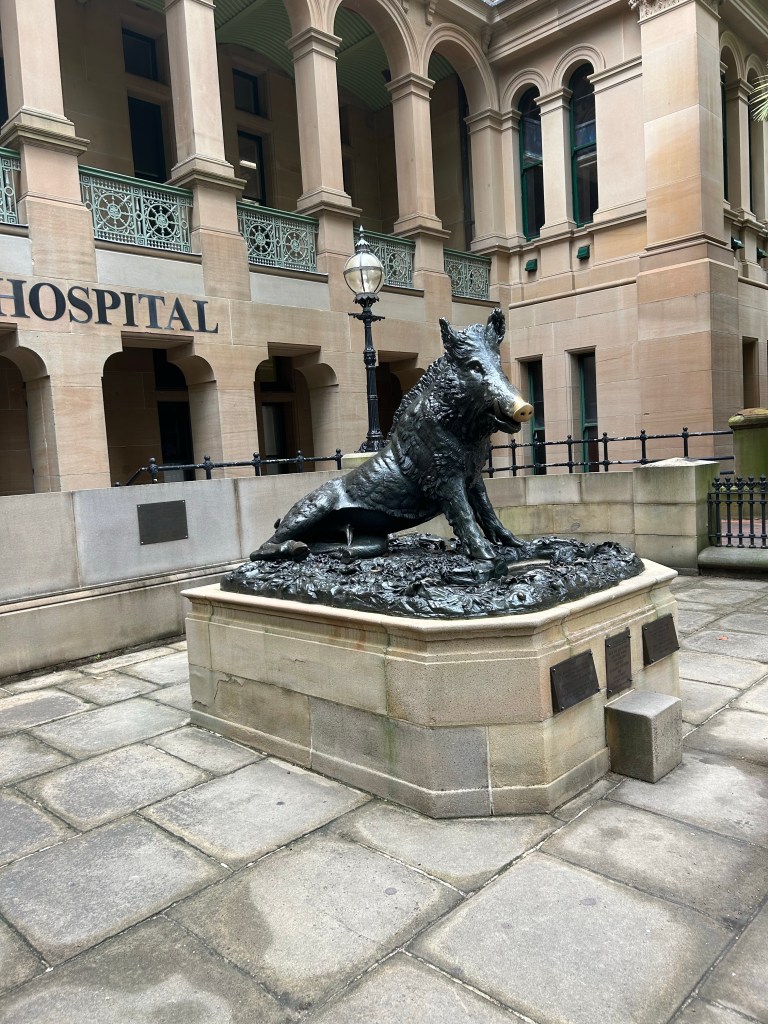
The image below is the actual functioning Sydney Hospital as it stands today. It was built over the central wing of the Rum Hospital. The pig in front is a copy of a 500 year-old sculpture from Florence. The snout is supposed to be rubbed for good luck.

Having seen the old Royal Mint, we then moved on the modern treasury, the Commonwealth Bank of Australia. Australian money, like Canadian money, is plastic (except theirs is also all different sizes). The handy thing about plastic money is that it can be recycled (alongside all those other perks, like it holds up better and can’t tear as easily). In Australia, plastic money may be recycled into things like park benches…so you never know when you might be sitting on a million bucks!

Our next stop was the General Post Office Building. It was built and meant to rival London’s Houses of Parliament. Though very impressive, it does fall slightly short. The bell was similarly modelled after Big Ben and was so precious to Sydneysiders that they deconstructed it during World War Two out of fear that it would be destroyed. It was put into secure storage until the war was over. But someone had managed to get inside the storage facility during the course of the war, and had written “eternity” on the bell. “Eternity” popped up everywhere on the streets of Sydney, written in the oddest places. It stumped people for ages, until it was revealed that a man named Arthur Stace was the man behind the word. It is estimated that he wrote “eternity” half a million times in the 35 years that he went uncaught.
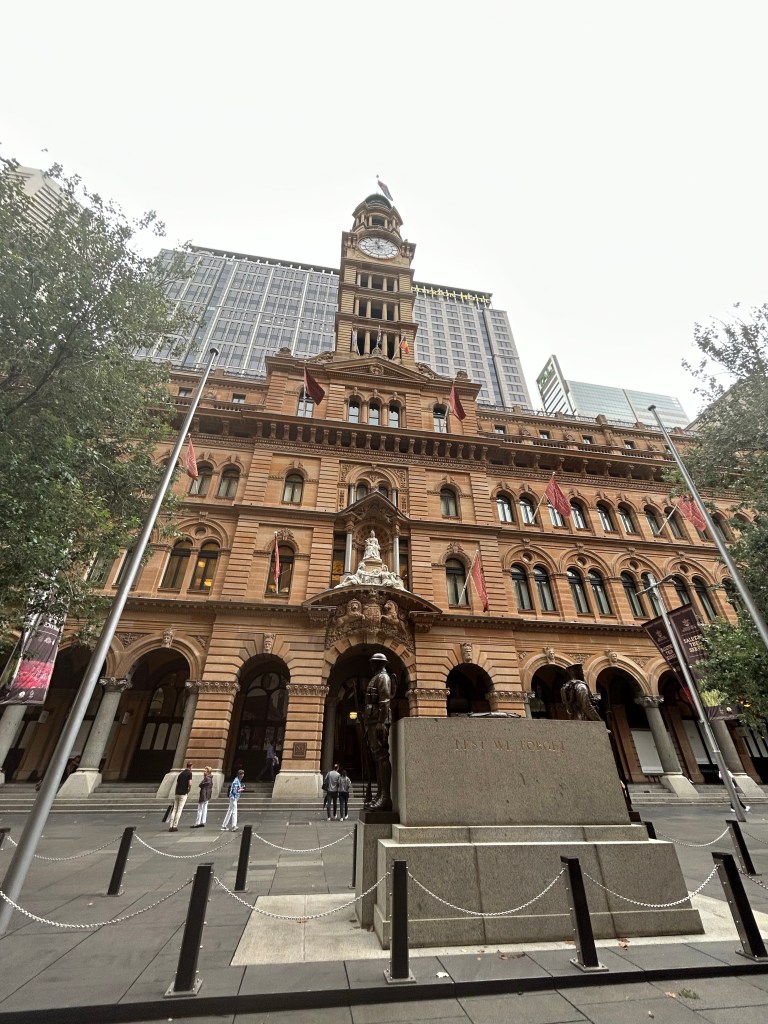
Opposite the General Post Office Building is the “Lest We Forget” memorial for the First World War. It was here, in Martin Place, that many Australian men signed up to fight in the war and it is now the centre of Anzac Day memorials.
We made our way through a few laneways as we continued on our way to Circular Quay. As you’ll remember, Melbourne has a huge laneway culture and our guide quipped that Sydney’s move to revitalize its own laneways is another way that they imitate Melbourne. This, naturally, led into a discussion of the capital-of-the-country debate. Sydney and Melbourne were both so stubborn about which one of them should be the capital of Australia that the government said that neither of them would be capital and built Canberra between them instead. Of course, in the twenty-some years it took to build Canberra, Melbourne was the capital.

On arrival in Circular Quay, we made our way through a small part of the Rocks area, stopping briefly to admire this tree (see below). It is a Wollamide pine that was thought to be extinct, until a botanist went to the Blue Mountains, found the unidentified tree, and brought back samples for testing. These pines, which were thought to have been extinct for 200 million years, continue to grow in the Blue Mountains region today, although they are notoriously hard to get to. This pine grows right in Sydney, easy for anyone to see.
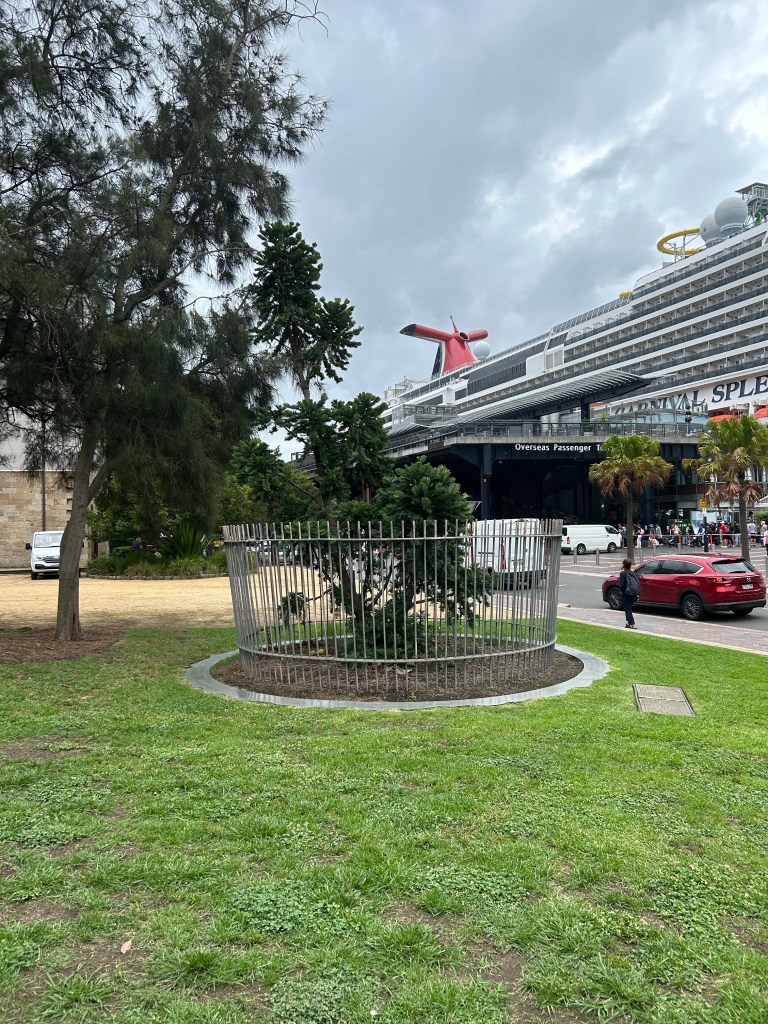
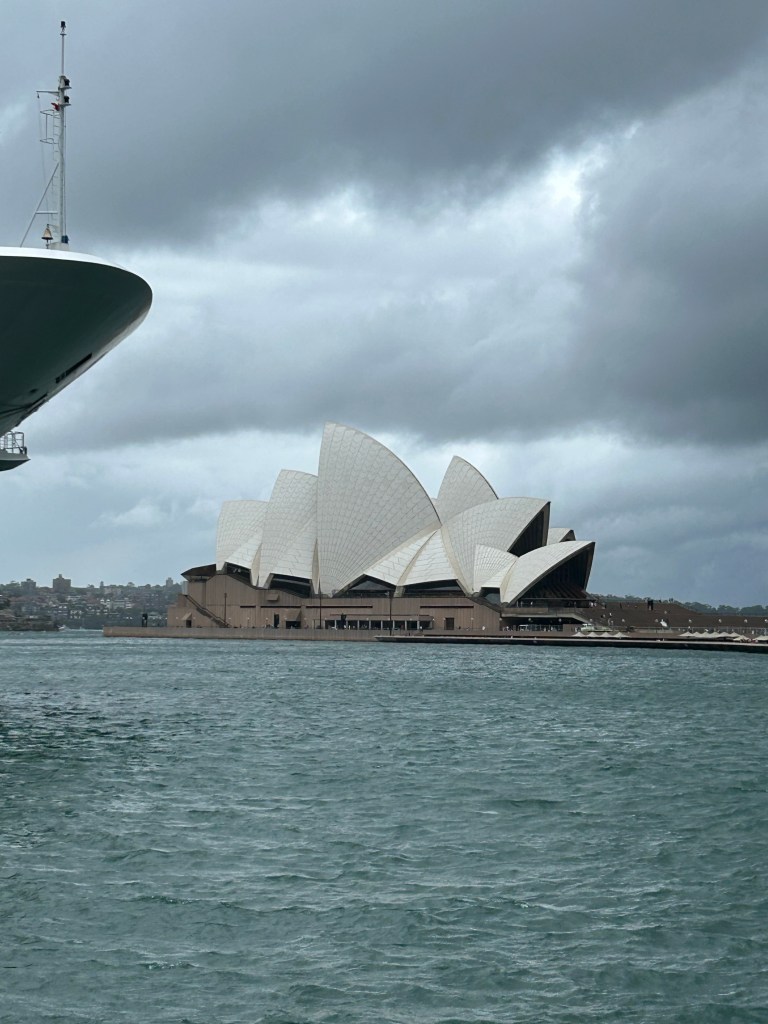
The Rocks area of Sydney is its original settled area and the buildings still date from the 1800s. New, relative to the rest of the world, but old for Sydney. Much of the area was actually bulldozed before everyone banded together against the city and forced them to revitalize rather than rebuild. From the Rocks, we climbed to an excellent viewpoint of the Harbour Bridge, which is probably the second-most recognizable monument in Sydney next to the Opera House. We would have been able to see the Opera House, too, but there was a cruise ship in the way (as there often is).

The Harbour Bridge was built starting in 1924 and became a huge saviour during the Great Depression as it helped keep millions of Australians employed, alongside other workers who were shipped over from the Netherlands, Ireland, and England. The project was undertaken to connect the two sides of the harbour more easily, as previously there had only been ferry service between them. Since the bridge’s construction, an underwater connection between the banks has been added. As do most things, the Harbour Bridge has another, cheekier name: the Coat Hanger, because it looks like a giant clothes hanger. Imaginative!
And then, of course, there’s the Opera House. The Opera House was commissioned by the government, who decided to open up architectural submissions to the world. The winner, the Danish architect Jørn Utzon, started construction of his lavish vision, but due to cost and scheduling problems that upset the government, the project was finished by Peter Hall and an Australian architectural team. Utzon, in fact, wasn’t evening recognized in the opening ceremonies, nor invited back to see his creation. He never did return to Australia to see the Opera House. To date, the inside of the Opera House has not been completed to Utzon’s visions. Still, it remains a showpiece and the most recognizable landmark in Sydney — if not all of Australia.
And thus ended the tour. So much information on the tour and so much history on the streets. It was excellent.
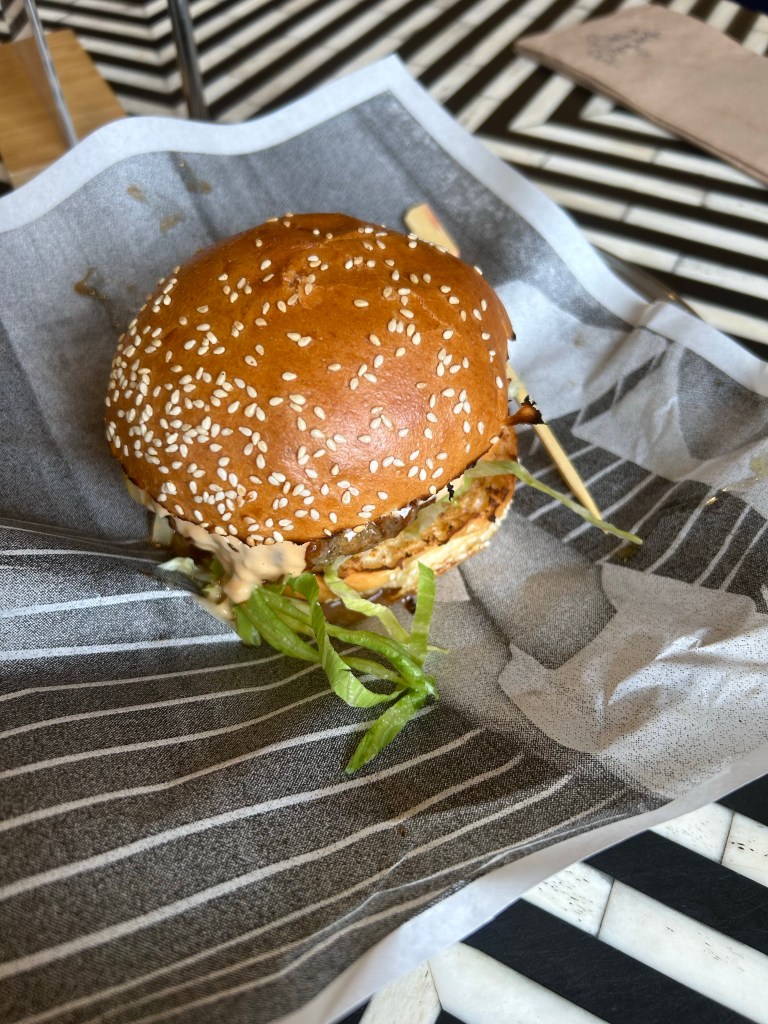
The day, unfortunately, had been threatening rain all day and finally started to let raindrops fall during the latter half of the tour and while we were taking in sights of Harbour Bridge (thankfully under a covered deck). After the tour, during which I’d discovered a major hankering for a burger, I went to Ribs & Burgers, a restaurant right in the Rocks. Their burgers are delicious – so moist and flavourful.
After lunch, I made my way back to the hostel and stayed in the rest of the day. I worked on the blog, relaxed in the dorm, and made dinner in that night.
But that wasn’t the end. I also headed to comedy night at Schirro’s Bar, which is affiliated with the hostel I was staying at! I had a beer and a soda along with a lot of laughs. They had some really awesome comedians up there that night.
What an active, informative, hilarious start to my time in Sydney!
If you enjoyed this post, feel free to leave a like, comment, or share it to friends and family! Want more frequent updates? Check out my Instagram @cait_around_the_world!
 CAIT AROUND THE WORLD
Leave a comment