
January 31, 2023 — Want to save money while travelling? Eat out less! Most hostels have kitchen facilities for travellers to use and, like at home, buying food at local grocery shops and cooking for yourself is much cheaper than eating out. That’s not to say you shouldn’t eat out — I certainly have and will continue to do so — but it’s a nice way to save some money when travelling for a long time.
So, that’s how I started my first day in Australia. I Googled the common food shops in Australia and found Coles, Woolworths, and Aldi. Coles and Woolworths are both Australian grocery chains and Aldi comes from Germany. I’ve shopped at both Aldi and Woolworths, but this morning I stumbled across an Aldi Corner Store first. Although it’s just a “corner store,” I still found a plethora of options! I bought yogurt, granola, eggs, and bread, then walked back to the hostel and had my first yogurt and granola bowl! It was delicious.
I booked an Airbnb Experiences tour, “Walk Melbourne with an Expert Tour Guide” (gifted — thanks, Mom and Dad!) for my first day in order to have a little introduction to the city. Though I enjoyed my small amount of walking and discovering the evening before, I was eager to learn more and to have a local perspective on the city. We met at Stanford Fountain in Gordon Reserve, near the Parliament House and across from The Hotel Windsor (which, apparently, is haunted!).
I loved that, at the end of this tour, our guide drew out where we went, what we saw, and provided more recommendations.
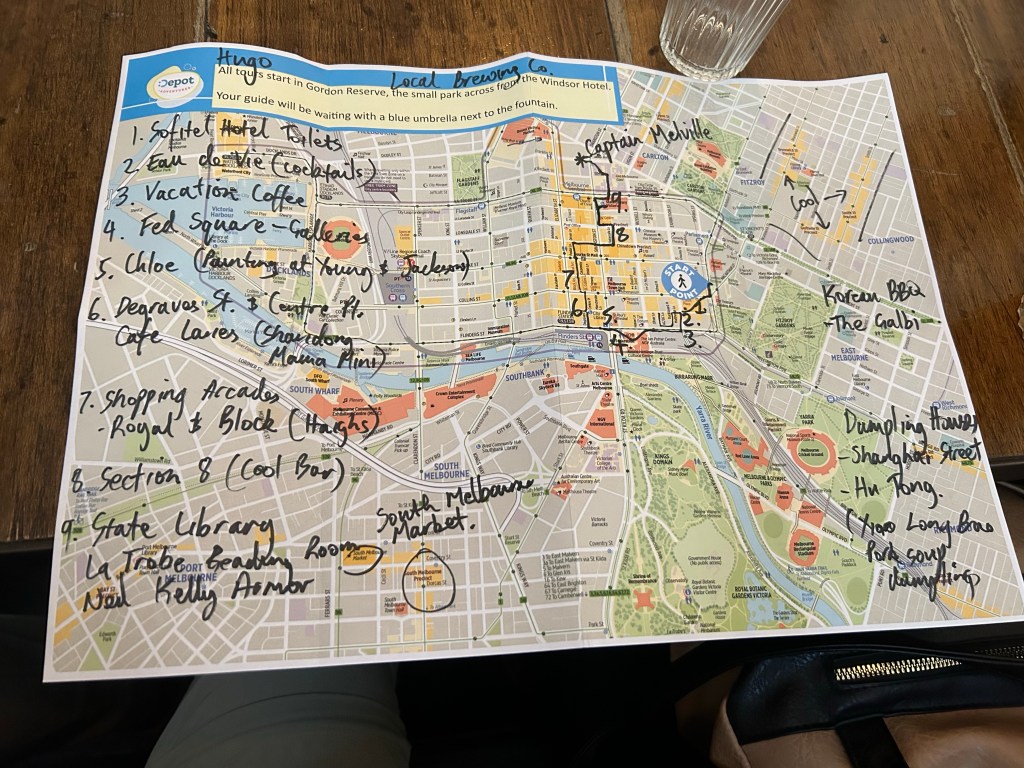
There were two couples and one other lady on our tour. One couple was from Poland, the other from Brisbane on the Gold Coast (but originally South Africa), and the other lady was from Peru and was visiting her daughter who lives in Australia. Such a wonderful group of people to tour with!
Our first stop was Collins Street, where we learned about the history of Melbourne as a colony. Australia was originally home to numerous Indigenous tribes. In 1770, James Cook sailed on the order of the British Empire and “claimed” Australia for Britain. New South Wales and Tasmania were the only established British colonies when John Batman planned to establish a new settlement. He got the First Nations chiefs in the area to sign a contract for thousands of hectares of land in exchange for tools, blankets, and other items. The contract was declared invalid by the Crown, as the lands were considered “Crown lands” at the time, and because another man, John Fawkner, also claimed settlement of the same area in a bid against Batman. Despite the conflicting claims of all parties, these thousands of hectares of land became modern-day Melbourne.
Also on Collins Street, we admired the architecture of the modern building, which was actually designed by I.M. Pei, the same architect who designed the Louvre Pyramid. Thus began a long-running look at how Melbourne, and Australia in general, competes with and tries to emulate European architecture and claims to fame.

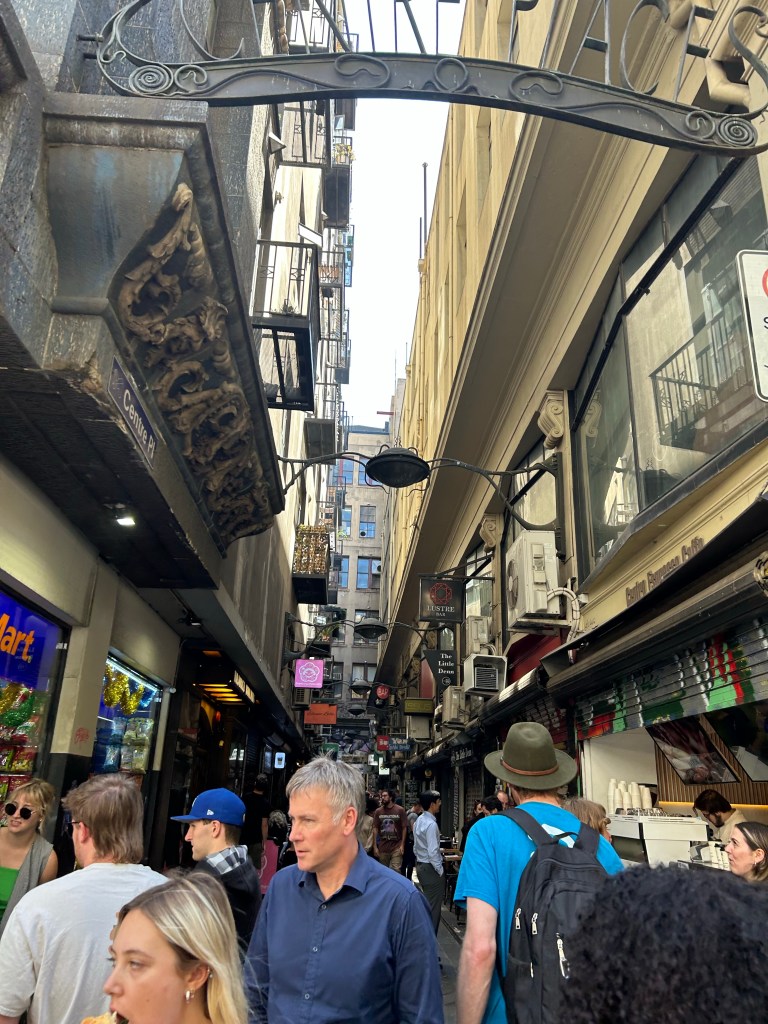
Our second stop took us down a couple of different laneways in Melbourne. The city planners realized that a grid system worked well, but that good waste management was also important. For that reason, laneways were built between and behind buildings. This way, garbage could accumulate in the back alleys between buildings instead of out front of people’s apartment buildings, houses, and places of business. As modern waste management and sewage systems come into use, the main purpose of those laneways is lesser, and the city invited businesses to set up shop in those laneways. Thus, a large cultural point of Melbourne lies in its laneways and the hidden gems that can be discovered there. Our tour guide, Hugo, actually said, “If it looks like a place where you might get stabbed, go down there!” Basically, though — Melbourne rewards the adventurous. Laneways are a great treasure trove of great restaurants and cafes. They are also abundant with street art.
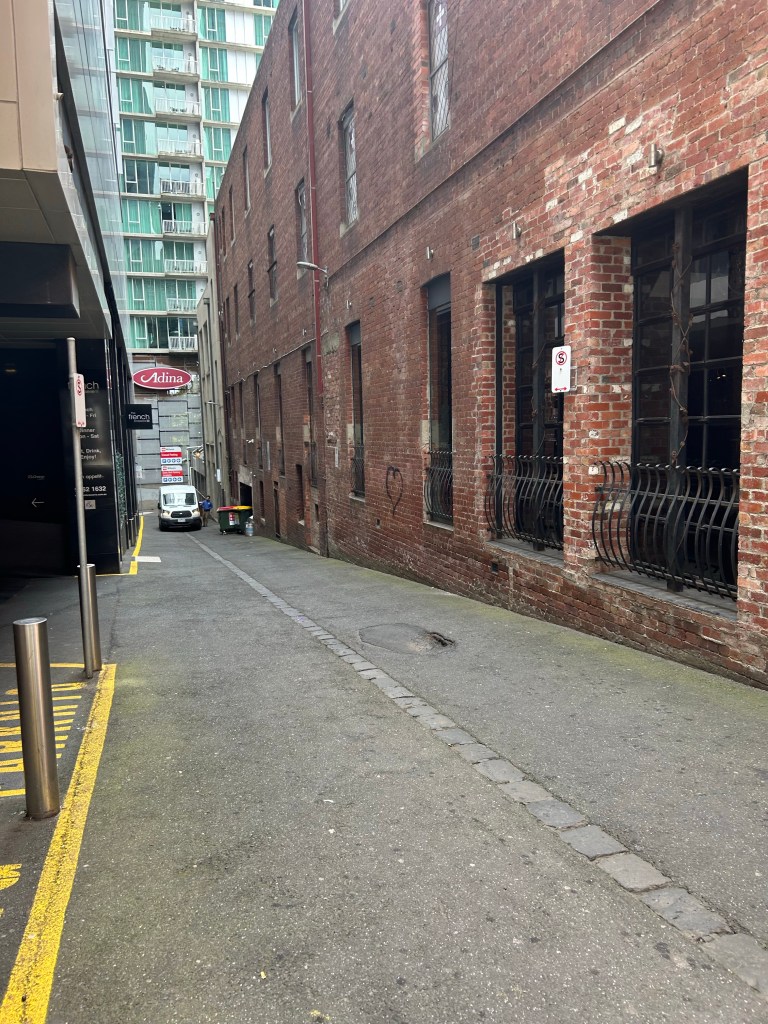


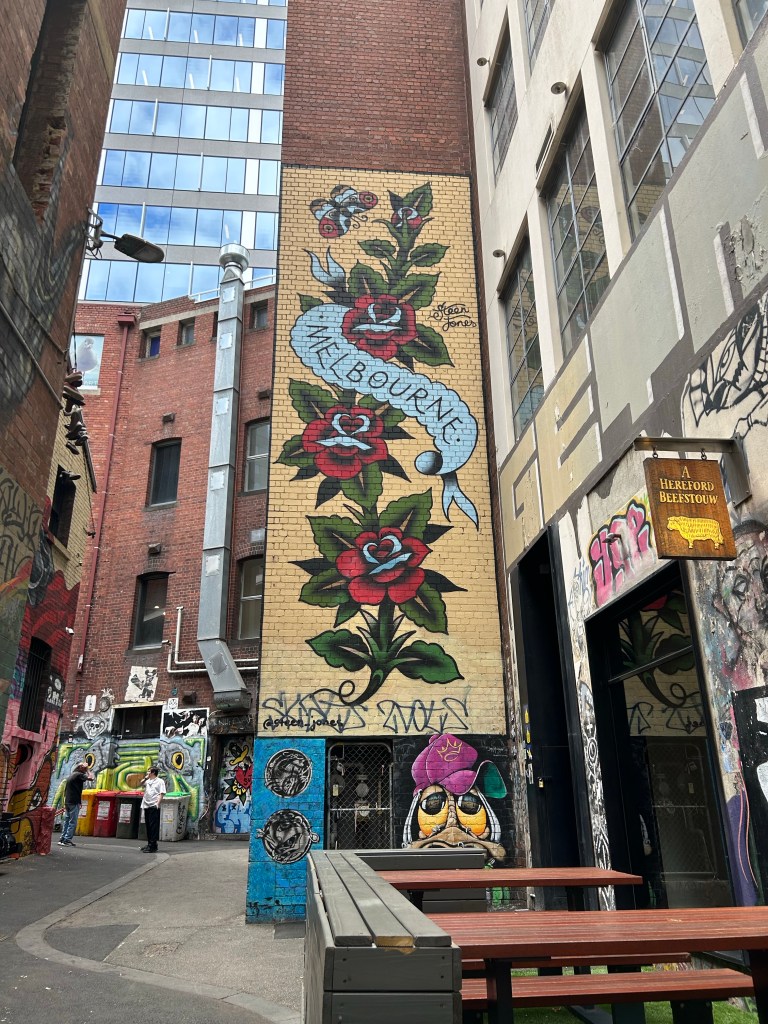
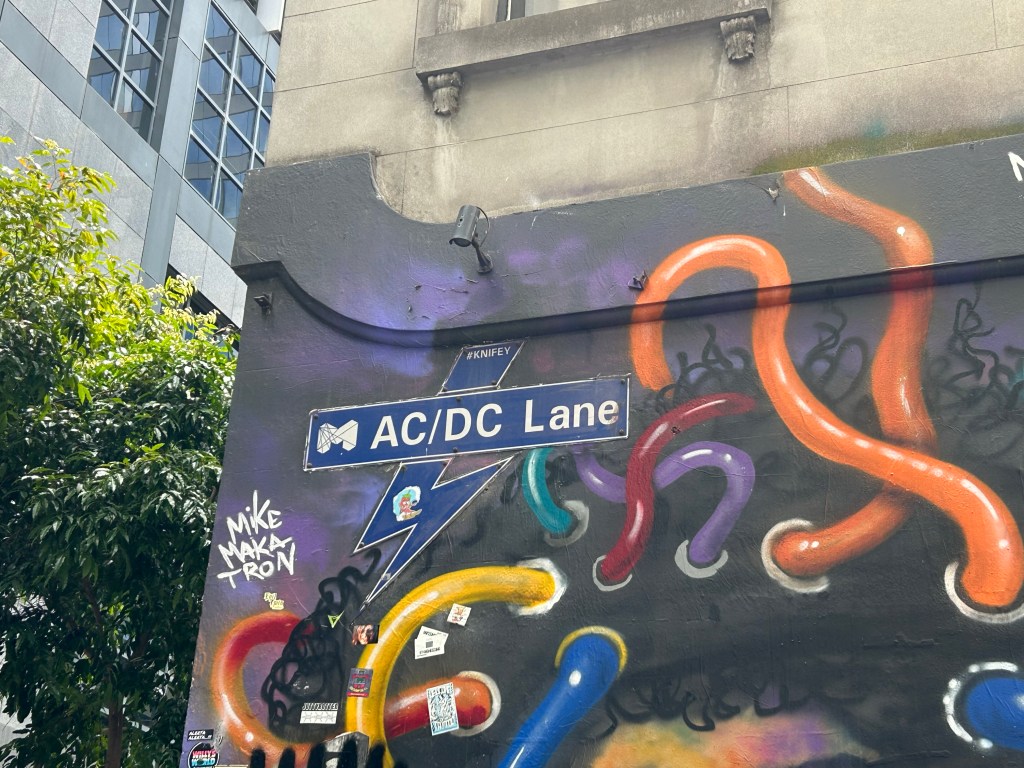
Initially, street art was illegal in Melbourne. But, as attitudes towards it grew and changed, the city got more on board with the idea. Now, you need a licence from the city and permission from the building owner. (Not that such regulations are actually followed most of the time.)
From AC/DC Lane, we made our way to a cafe called Vacation. Melbourne actually has a huge cafe culture which sprung up from Greek and Italian influences. The difference, however, is in the roasting. Where Greek or Italian coffees roast their beans more harshly, coffeemakers in Melbourne roast their beans slower and softer, resulting in a smoother and less bitter flavour. I’m not a big coffee drinker, and even I noticed!
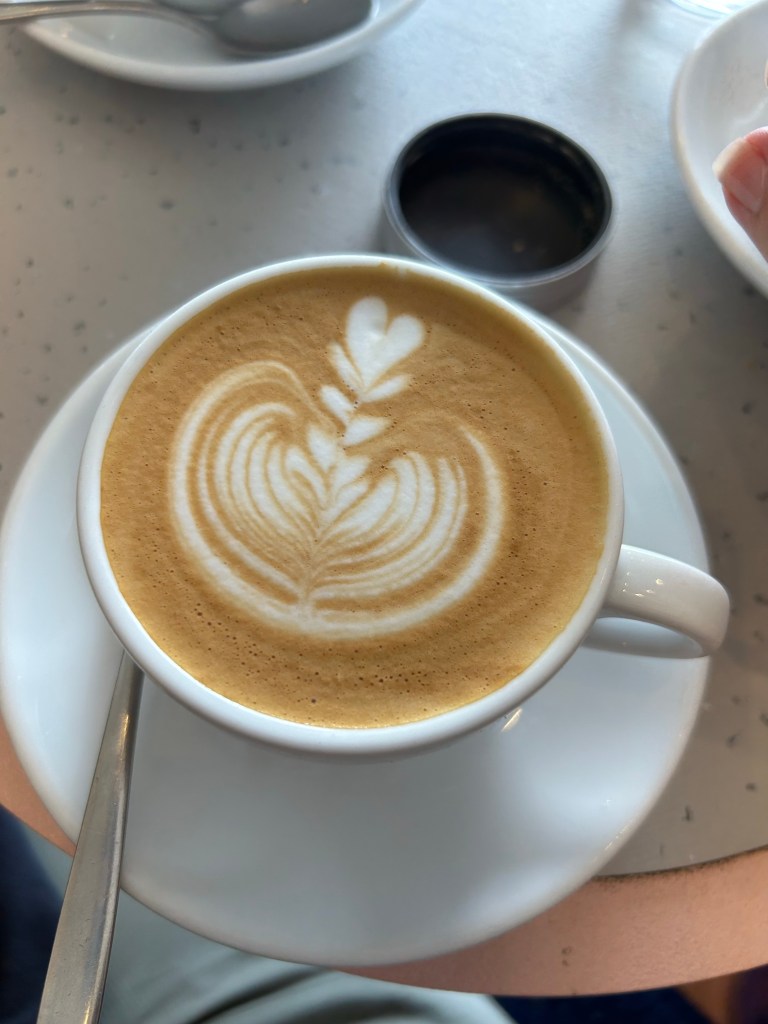
We continued on to Federation Square, which acts as a gathering place for many festivals and events in Melbourne. It is also home to the Indigenous exhibit of the National Gallery of Victoria. The rest of the National Gallery collection is housed in a separate building a few hundred yards away. The architecture of Federation Square is actually one of controversy, as there are some that like it and some that don’t like it one bit. It’s very geometric in design, and some parts may even appear unfinished. It also hides one of Melbourne’s old churches behind one of its buildings. That building was actually rebuilt four different times. The entire complex was built late and drastically over-budget. Still, it is a popular venue and hangout in Melbourne.
Our next stop on the tour was unscheduled and unplanned, which just made this tour that much more special. We first stopped by Flinders Street Station, which is where all the trains used to come into Melbourne. Plenty still run through here, and one of the coolest things about the building is that the old analog clocks are still used to show when trains are arriving in the station, although they are now adjusted by machines instead of people.

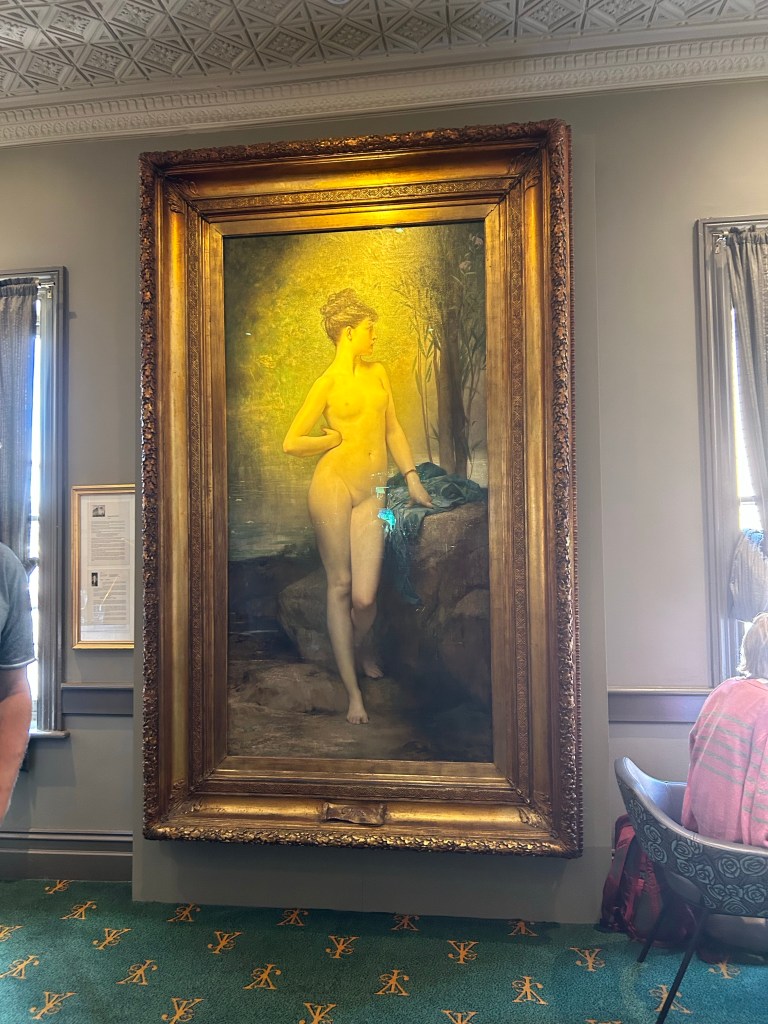
Opposite Flinders Street Station is the Princes Bridge Hotel, which houses a bar and a very interesting piece of artwork: Chloe. This painting was initially on display in the National Gallery of Victoria, until growing displeasure with the nudity in the painting forced the gallery to take it down. Believing that the painting should be shared with the masses, the owner of the Hotel (then called Young and Jackson) bought the painting and put it on display in the bar. For years, servicemen who were shipping out (often via Flinders Street Station) to war would drink toasts to Chloe, and would even send letters from the front addressed to her. The painting itself is worth $5 million.
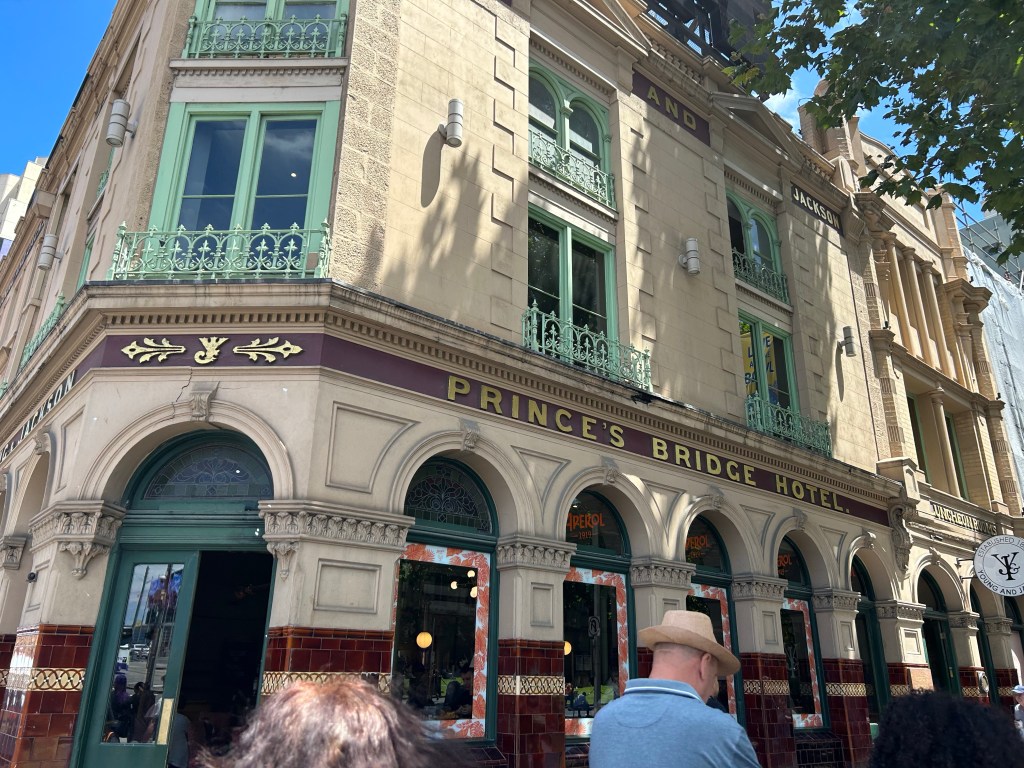
From Flinders Street, we filed down Degraves Street and Centre Place, on our way to the Shopping Arcade and the Royal Block.
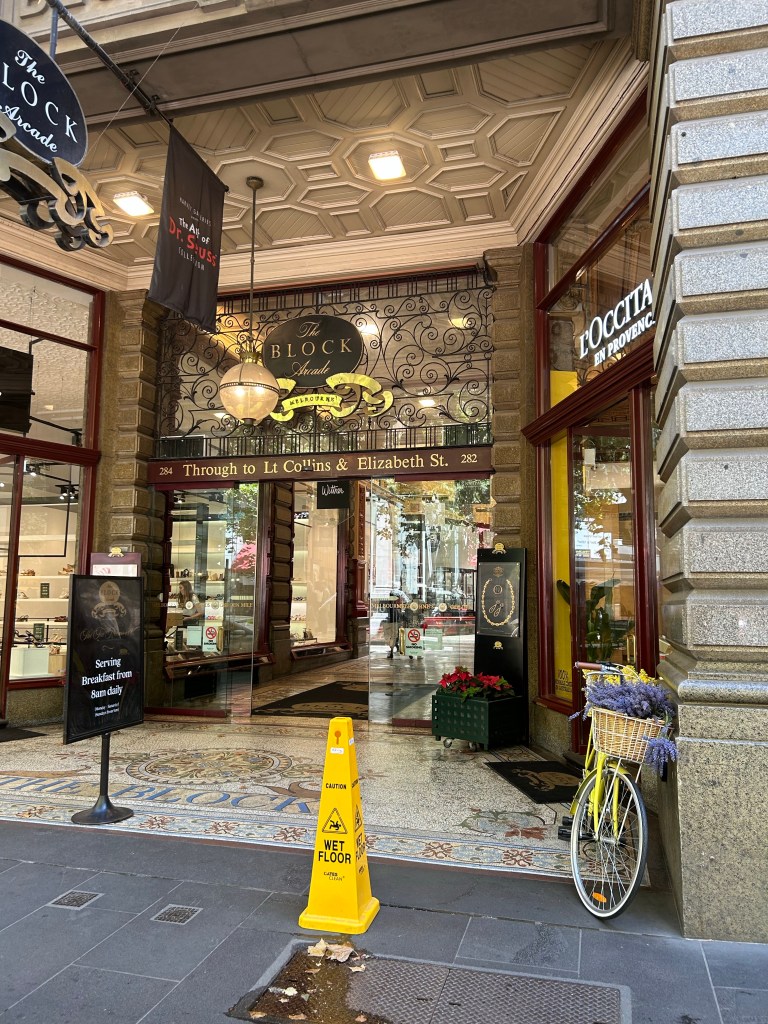
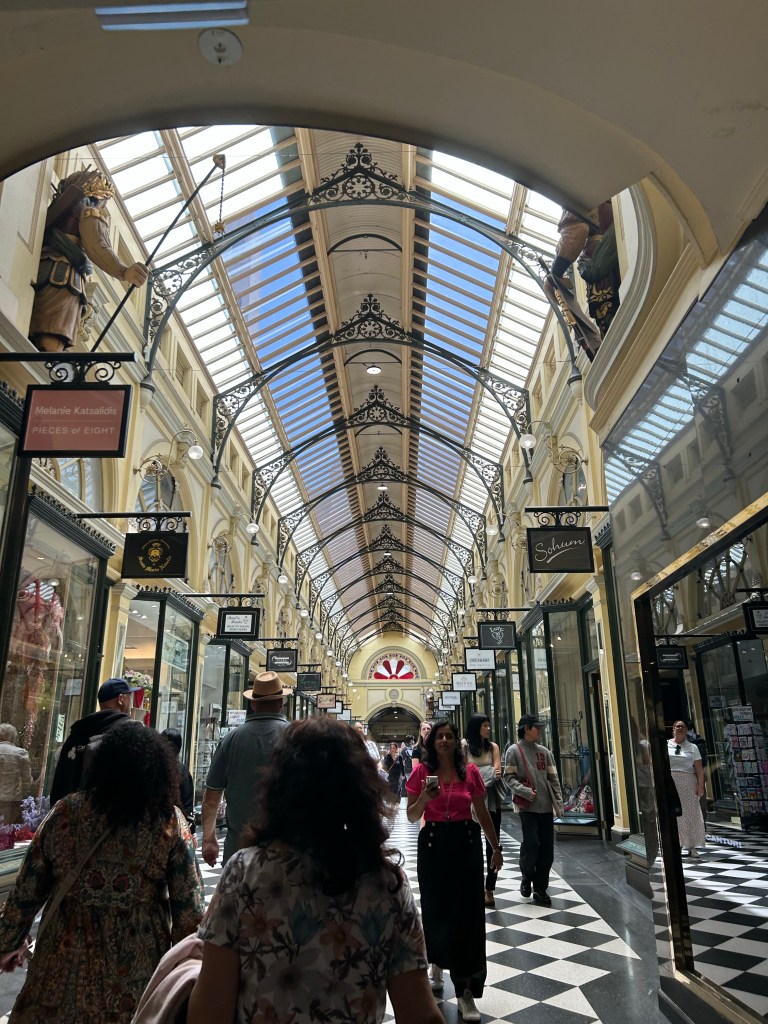
In the 1850’s, Melbourne struck gold. In the tradition of every gold rush town, this meant that incredible wealth poured into the city. And what does one do when they have all this money and nothing to do with it? Build incredible buildings, of course. The city’s old post office (which now houses H&M department store), Royal Arcade, and The Block Arcade sprung up out of this time. The architecture is truly amazing — the columns, the ceilings. The floor of The Block Arcade is intricate mosaic with each tile imported from Italy.
According to our tour guide, both Arcades were not only great shopping centres, but were also places for people in the city to walk around and show off their wealth without worry of spoiling their finery, since the roads at this time were still dirt. We were actually told that the Arcades were one of the best places for people of wealth to find husbands and wives, as ladies would walk on one side down the Arcade and men on the other, passing each other with every turn about the shopping centre. See someone you like? Catch them on the next go-round.

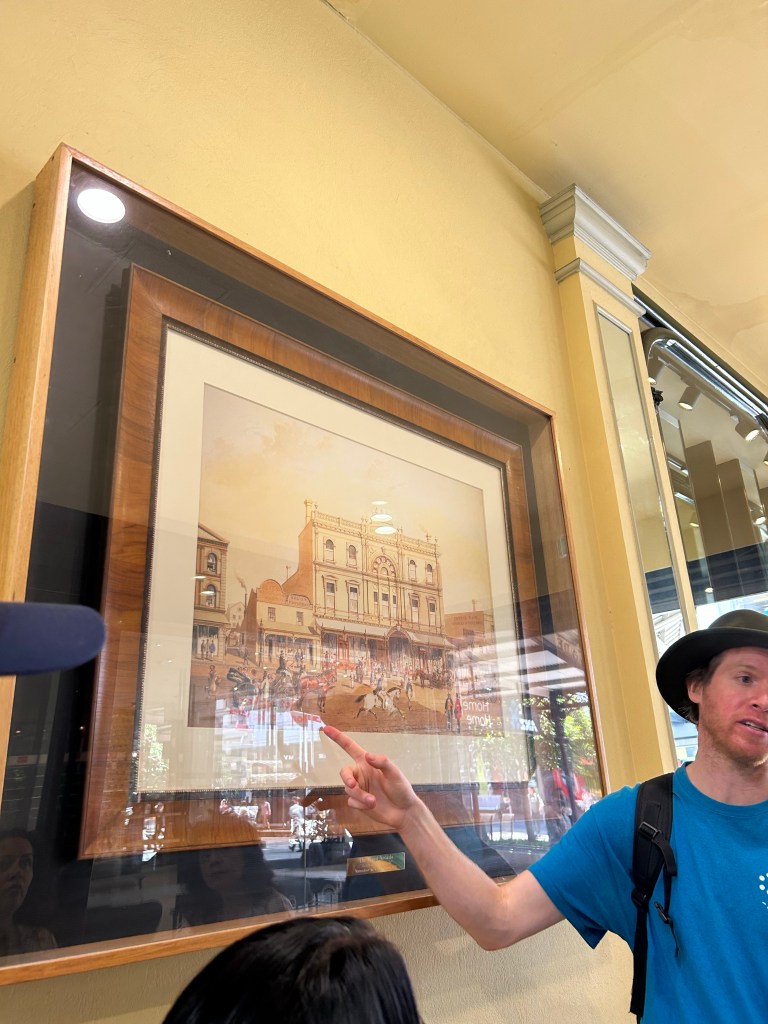
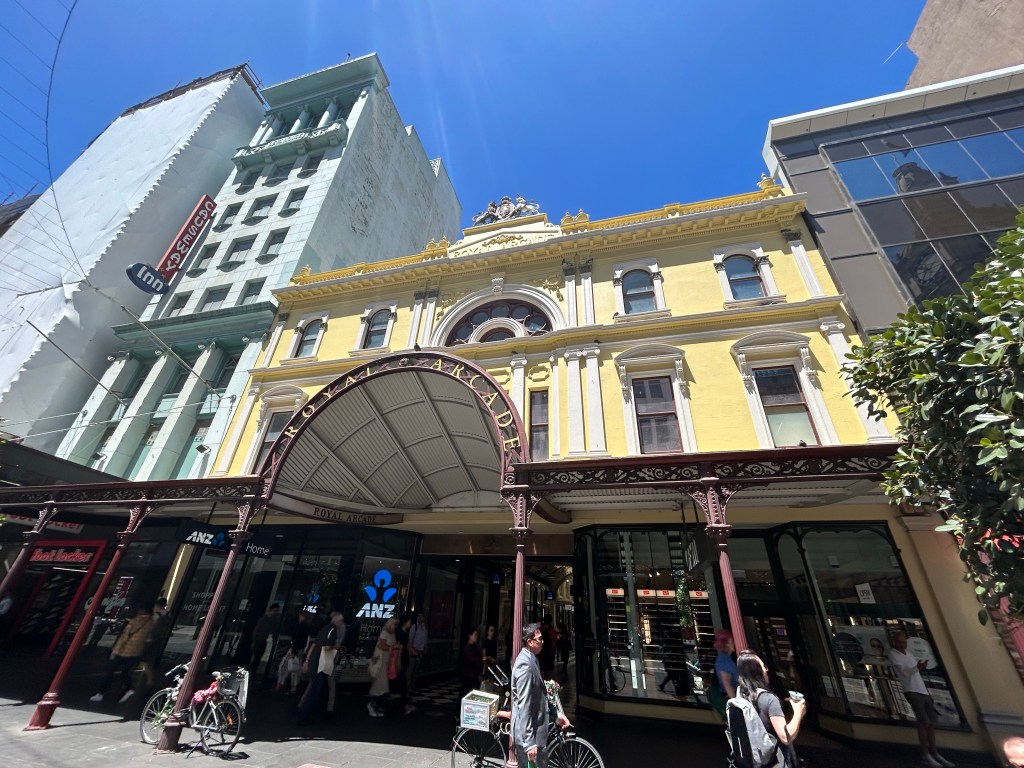
The Royal Arcade’s outdoor facade actually still looks exactly the same as it did in the 1850s: check out this watercolour compared to the outside today.
One of our last stops was the State Library and the Old Melbourne Gaol. It was here that we heard the exploits of Ned Kelly, a famous Irish-Australian outlaw and one of the defining characters of Australia’s colonial heritage. Kelly’s parents were convicts, sent from England to Australia. The police force and other immigrants to Australia were discriminatory toward Irish people and the story goes that Ned Kelly was accused of horse-stealing and other crimes. Tired of being pursued like a criminal, even though he insisted he was not at the time, he turned to a life of crime and living on the lam. His great standoff with the police came outside a hotel where he and his gang were holed up. He was told to come outside. He and his gang emerged, cloaked head-to-toe with bulletproof steel. This bulletproof suit still hangs in the State Library.
Ned Kelly was an outlaw, but he was also a heroic figure to many in Australia, in the tradition of Robin Hood and others of that ilk. He often stole from banks and burned mortgage agreements, meaning that banks could no longer hold landowners responsible for paying those mortgages. In that steal-from-the-rich-give-to-the-poor way, among others, Ned garnered support among the lower classes. His legacy is seen as indicative of Australia and her roots as the country was originally a convict settlement.
In the Old Melbourne Gaol, Ned Kelly awaited execution. He was to be hanged for his crimes, which by this time not only involved theft but also murder as he had killed several police officers during his years on the run. On the eve of his execution, guards were so concerned that there would be an attempt by his supporters to break Ned out of jail that they moved him underground from the jail to another place to wait out the night. The next day, the hangman’s noose around his neck, Ned’s last words were, “Such is life.”
That place where Ned waited out the night before his hanging was one of the coolest stops on our tour. The place that Ned waited out the night was once Mac’s Hotel and is the last surviving coaching hotel in central Melbourne. The remains of Mac’s Hotel is now Captain Melville, the bar where we finished our tour.
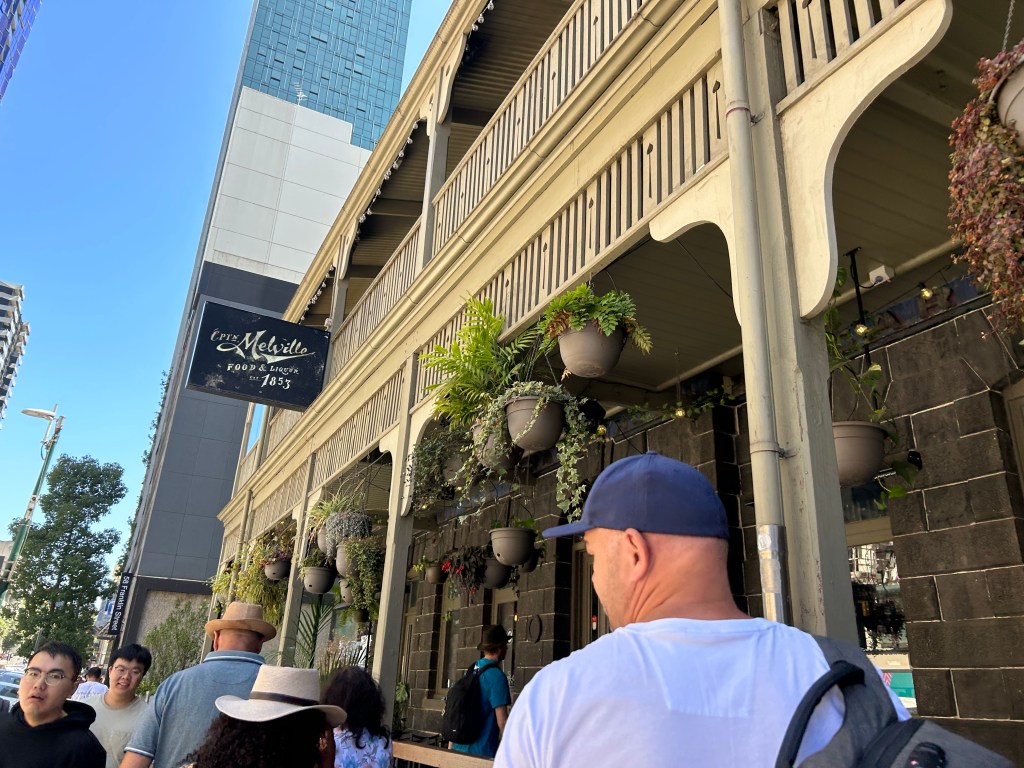
And so ended our tour, in a place of great historical significance and modern industry.
I absolutely loved the tour of Melbourne and cannot recommend it enough. If you’re even in Melbourne and you have the chance, I highly recommend checking it out!
After the tour, I headed to Aldi again for a few more groceries, then back to the hostel. I had a nice soak in the hot tub, did some laundry (my first load since leaving home!), made and ate dinner , and then was chilling in my room when I met a couple of my new roommates. Both were from France and were heading out for beers and then up to the rooftop of our hostel and they invited me to join them. I did, and our group was about fifteen strong by the time everyone arrived! I had a great night talking with everyone — there were several Canadians, a few others from France, more from Germany, one from the Netherlands and one from Northern Ireland. I even had a whole Stella Artois — Dad would be so proud.
I turned in that night after a fantastic day of culture, exploration, and laughter. My first day in Melbourne certainly did not disappoint.
 CAIT AROUND THE WORLD
Leave a comment